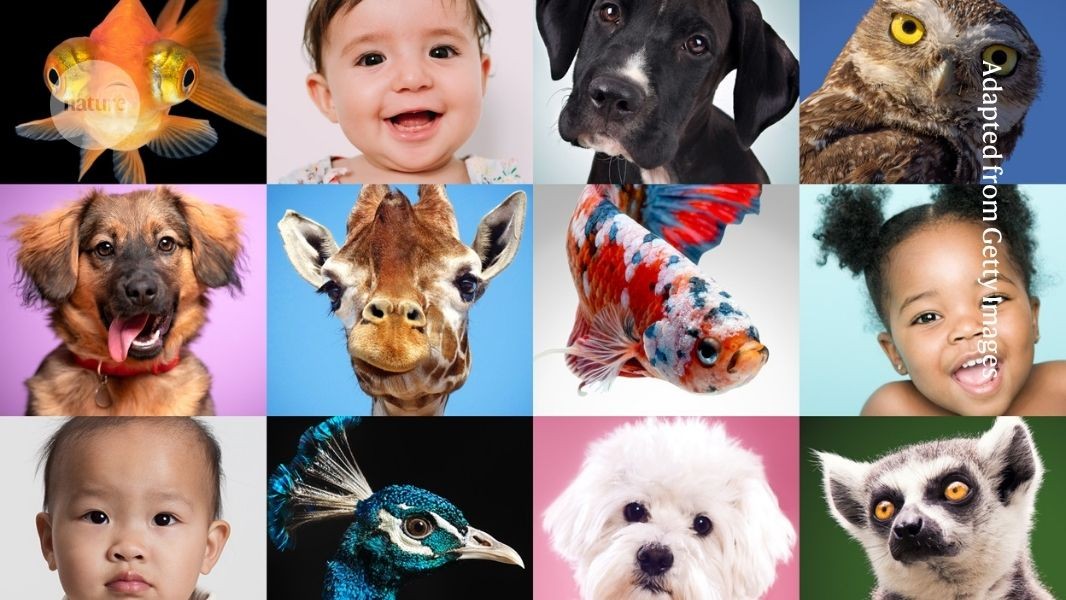
Massive lab collaboration is the antidote to decades of small, unreliable studies.
Babies and dogs are the new frontline in psychology's war on irreproducibility. Over 50 labs worldwide are teaming up to run massive studies...
Psychology's replication crisis has been a persistent headache for mental health professionals and researchers. For years, many landmark stu...
The Science Gets an Unlikely Army
Babies and dogs are the new frontline in psychology's war on irreproducibility. Over 50 labs worldwide are teaming up to run massive studies that aim to restore trust in cognitive science. This initiative, known as the ManyBabies Consortium and its extension ManyDogs, represents a paradigm shift in how science is conducted. Instead of a single lab publishing a study with 30 participants, dozens of teams now collaborate with identical protocols, massive samples, and blinded analyses. The goal is to eliminate false positives and questionable research practices that have plagued psychology for decades.
laboratory with babies and dogs
“Massive lab collaboration is the antidote to decades of small, unreliable studies.”
The Science Behind the Shift
The Science Behind the Shift
Psychology's replication crisis has been a persistent headache for mental health professionals and researchers. For years, many landmark studies couldn't be replicated, casting doubt on treatments, theories, and the field's credibility. A 2015 analysis found that only 36% of social psychology studies could be successfully replicated. Now, a consortium of labs is tackling the problem at its root: conducting studies with enormous sample sizes and standardized protocols. The key is open collaboration: researchers share data, code, and methods before data collection, eliminating the temptation to adjust analyses after seeing results.
The unlikely heroes are babies and domestic dogs. Why? Because both offer unique windows into cognitive and social development without the biases of adult humans. Babies allow researchers to study basic learning and attention processes before language and culture shape them. Dogs, coevolved with us for millennia, respond to social cues in ways comparable to young children. The idea is that if these studies work, they could set a new standard of rigor for all of psychology. Moreover, dogs are easier to recruit than babies and allow for faster longitudinal studies, accelerating the discovery cycle.
Preliminary data are promising. According to the Nature article, the first mega-studies have successfully replicated key findings that were previously elusive. For example, an experiment on object perception in 6-month-old babies showed consistent results across 15 different labs—something that was once exceptional. The total sample exceeded 2,000 infants, far above the typical 30 or 40 participants. For dogs, a study on referential communication (pointing to indicate a treat's location) replicated across 12 labs with over 1,000 dogs, showing that dogs understand human pointing better than previously thought. These results not only confirm prior findings but refine them with unprecedented statistical precision.
research data on computer screen
Key Findings
Unprecedented collaboration: Over 50 labs in 12 countries work together, sharing protocols and data openly. This model contrasts with the traditional culture of competition and secrecy.
Massive samples: Studies include more than 2,000 babies and 1,500 dogs, far exceeding typical sample sizes. This allows detection of small but meaningful effects that previously went unnoticed.
Successful replication: Experiments on joint attention and theory of mind in babies replicated consistently across multiple sites. The replication rate exceeds 80%, well above the historical average.
New standards: Preregistered protocols and blinded analyses are being developed and could become the norm. The consortium also promotes publishing null results, reducing publication bias.
Clinical implications: Findings on early social development could inform interventions for autism spectrum disorders and more. For instance, early identification of joint attention deficits could enable more effective therapies.
dog and baby interacting in study
Why It Matters for Your Mental Health
Why It Matters for Your Mental Health
For mental health professionals and cognitive biohackers, this news is a watershed moment. If psychology resolves its replication crisis, every recommendation on parenting, education, and therapy will gain a solidity it currently lacks. Parents seeking to optimize their children's development, therapists applying evidence-based techniques, and researchers designing new treatments will directly benefit. Imagine a world where parenting guides are based on studies with 2,000 babies instead of 20—that's what this movement promises.
Moreover, using babies and dogs as models has deep implications. Dogs offer a pathway to study the human-animal bond and its impact on mental health. Evidence already shows that interacting with dogs reduces cortisol and boosts oxytocin. If these mega-studies confirm specific mechanisms, we could see much more precise animal-assisted therapy protocols. For example, knowing exactly what type of interaction (play, petting, walking) yields the greatest psychological benefits would allow designing more effective interventions for anxiety, depression, and PTSD.
From a brain longevity perspective, understanding how attention and memory develop in early years can help design early interventions that prevent cognitive decline decades later. The basic science emerging from these studies is the foundation for future clinical applications. For instance, if joint attention in infancy is shown to predict executive function skills in adulthood, we could develop training programs to strengthen those skills early, potentially delaying the onset of neurodegenerative diseases.
Your Practical Protocol
If you're a parent, educator, or therapist, here's how to apply these findings today:
1Prioritize early social interaction. Replicated studies show babies learn best in joint attention contexts with adults. Talk, point, and follow your baby's gaze. This strengthens the foundations of theory of mind. Dedicate at least 15 minutes daily to shared attention games, like looking at a book together or pointing out objects in the environment.
2Consider animal-assisted therapy. Dogs are proving to be reliable models for studying social bonding. If you work with children with autism or anxiety, incorporating trained dogs could enhance outcomes, backed by more robust data. Ensure the dog is certified and interaction is supervised by a professional.
3Demand replication. As a science consumer, look for studies that have been replicated across multiple labs. Distrust single findings. Massive collaboration is the new quality standard. Before applying a recommendation, check if it is part of a replication consortium like ManyBabies or ManyDogs.
4Engage in citizen science. Some labs recruit families with babies and dog owners to participate in online studies. This not only contributes to science but gives you firsthand access to information about cognitive development.
parent interacting with baby at home
What To Watch Next
What To Watch Next
The consortium plans to expand to more countries and add new species, like horses and dolphins, to explore comparative social cognition. They are also developing an open platform where any researcher can access data and protocols. This could democratize science and accelerate discoveries. Additionally, longitudinal studies are being designed that will follow the same babies and dogs over several years, allowing understanding of how early skills predict later outcomes.
In the next two years, expect the first meta-analyses confirming whether this strategy truly reduces false positive rates. If it works, it could inspire similar movements in neuroscience, medicine, and other behavioral sciences. The question isn't whether psychology will be saved, but which other disciplines will follow its lead. Conversations are already underway to create similar consortia in clinical psychology and affective neuroscience.
The Bottom Line
Psychology's replication crisis is getting a bold response: massive studies with babies and dogs, run by an army of collaborating labs. Early results show that replicating key findings is possible when working with large samples and standardized protocols. For parents, therapists, and development optimizers, this means the evidence behind recommendations will become increasingly solid. The future of cognitive science is being built with diapers and leashes—and that's great news for everyone.