
Your body is a walking electromagnetic field. And now, for the first time, we have a cosmic map of the magnetic fields surrounding us—five times larger than any previous attempt. This isn't just astronomy; it's a window into how magnetic fields might influence your biology, from sleep to longevity.
The Science
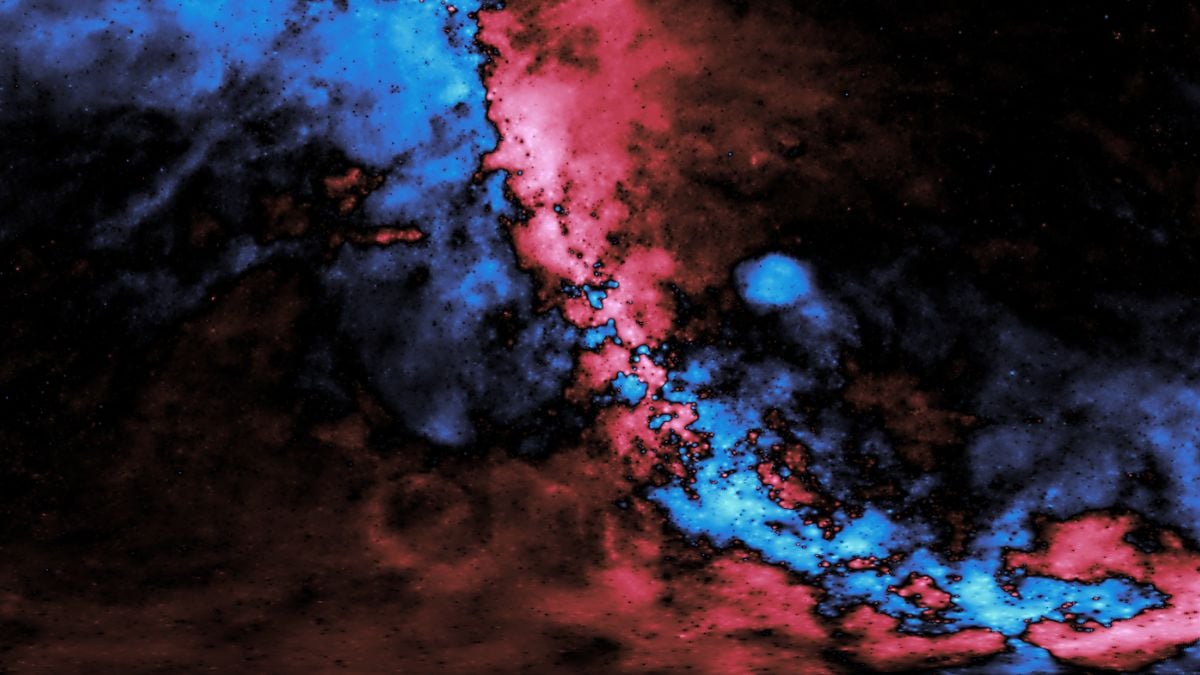
Scientists from the Atacama Cosmology Telescope (ACT) and the European Southern Observatory (ESO) have released the largest and most detailed map of the universe's magnetic fields. The study, led by an international team, combines data from over 1.5 million galaxies to trace cosmic magnetic structure at unprecedented scales. The map is five times larger than any previous magnetic map, covering a significant fraction of the observable sky. To put that in perspective, earlier maps covered areas equivalent to a few hundred full moons; this new map spans thousands, offering an unprecedented view of the magnetic web connecting galaxies.

These magnetic fields, though weak, are omnipresent. They are believed to play a crucial role in galaxy formation and the propagation of cosmic rays. But what interests us here is how these fields might interact with Earth's magnetic field and, ultimately, with our own bodies. Research suggests that ambient magnetic fields can influence biological processes such as melatonin production, circadian rhythm regulation, and mitochondrial function. A 2024 study in *Nature* found that extremely weak magnetic fields (in the microgauss range) can alter the orientation of cryptochrome proteins in human cells, suggesting a direct magnetic sensing mechanism. While the magnitude of cosmic fields is much smaller, their constancy over evolutionary timescales may have shaped our physiology in ways we are only beginning to understand.
“This cosmic magnetic map is the first tool that allows us to study the influence of magnetic fields on human biology on a global scale.”
Key Findings

- Record size: The map is five times larger than any previous magnetic map, covering a region of the sky containing millions of galaxies. This allows, for the first time, the study of large-scale magnetic structure, revealing patterns previously invisible.
- Filamentary structure: Magnetic fields organize into filaments stretching millions of light-years, forming a cosmic web. These filaments act as highways for charged particles, channeling cosmic rays and potentially affecting the radiation reaching Earth.
- Weak but constant intensity: The strength of these fields is extremely low (on the order of microgauss, one-millionth of Earth's magnetic field), but their constancy on cosmic scales suggests they could have subtle long-term biological effects. Unlike variable artificial fields, these are stable, potentially allowing organisms to adapt.
- Correlation with cosmic rays: The map shows how magnetic fields deflect cosmic rays, potentially affecting the amount of radiation reaching Earth. Since cosmic rays have been linked to genetic mutations and cellular aging, understanding this interaction is crucial for assessing long-term health risks.

Why It Matters
For the biohacker and health enthusiast, this map opens a new frontier: the possibility of correlating cosmic magnetic field exposure with human health parameters. Although research is in its infancy, previous studies have linked geomagnetic storms (caused by solar wind) to changes in blood pressure, sleep quality, and heart attack incidence. A 2023 meta-analysis in *Scientific Reports* found a 5% increase in cardiovascular hospitalizations during severe geomagnetic storms. This map provides the cosmic context needed to start understanding those mechanisms, allowing researchers to correlate specific magnetic field events with population health data.
Magnetic fields could influence melatonin, the sleep hormone, by altering pineal gland activity. It has also been suggested that weak magnetic fields can affect protein orientation and free radical reactions in mitochondria, a process known as the radical pair effect. This effect, demonstrated in the lab for fields in the milligauss range, could be relevant for reactive oxygen species (ROS) production and thus cellular aging. If cosmic fields modulate this process subtly, they could influence longevity over generations.
Moreover, the navigation of migratory animals like birds and sea turtles depends on magnetic field detection. Humans have cryptochrome proteins in the retina that may also be sensitive to magnetic fields, though their function in us remains unclear. This map could help design experiments to test whether we can actually "feel" these fields, for example, by exposing subjects to simulated fields in the lab while monitoring brain activity with EEG. If human sensitivity is confirmed, the implications for mental health and cognition would be enormous.
Your Protocol
While we can't change the cosmic magnetic field, we can optimize our environment to minimize interference and leverage potential benefits. Here are three practical steps based on emerging science:
- 1Monitor your exposure to artificial electromagnetic fields (EMFs): Use an EMF meter to identify sources in your home, such as WiFi routers, cordless phones, and power lines. Keep the bedroom free of electronics at night to support natural melatonin production. Studies show that exposure to 50-60 Hz EMFs can suppress melatonin by up to 20%. Aim for a bedroom environment with less than 0.5 mG (milligauss) magnetic field.
- 2Optimize sleep with magnetic shielding: Consider using shielding fabrics or paints if you live near high-voltage lines or in areas with high electromagnetic interference. Reducing artificial EMFs could improve sleep quality and recovery. A simpler option is to move your bed away from walls with electrical wiring. You can also use a grounding sheet, which, while not shielding magnetic fields, may help balance the body's electric field.
- 3Track geomagnetic activity data: Apps like "SpaceWeatherLive" or "Geomagnetic Forecast" alert you to solar storms. During periods of high activity (Kp index > 6), prioritize recovery, reduce stress, and avoid tasks requiring high concentration, as some studies suggest a correlation with increased irritability and fatigue. Additionally, consider adjusting your blue light exposure on these days, as the combination of geomagnetic stress and circadian disruption may be synergistic.
What To Watch Next
The ACT team is already working on the next generation of magnetic maps, with ten times higher resolution, enabling identification of magnetic structures at the scale of individual galaxy clusters. Additionally, ESA's Euclid space telescope, launched in 2023, will provide complementary data on the universe's magnetic structure using gravitational lensing. In the health arena, expect clinical trials correlating these cosmic data with human biomarkers such as heart rate variability (HRV), salivary melatonin levels, and sleep quality measured by wearables. A pilot study at the University of California in 2025 is already recruiting participants to test whether exposure to simulated magnetic fields (based on the map) affects HRV and mood. Preliminary results are expected by late 2026.
The Bottom Line
The largest magnetic map of the universe is a reminder that we are immersed in an ocean of invisible fields that could influence our biology. While science doesn't yet have all the answers, evidence points to optimizing your electromagnetic environment as another variable in the health equation. Stay informed, measure your exposure, and adjust your surroundings. The cosmos might be whispering longevity secrets.
:format(png):quality(99):watermark(f.elconfidencial.com/file/a73/f85/d17/a73f85d17f0b2300eddff0d114d4ab10.png,0,275,1)/f.elconfidencial.com/original/6df/6cf/276/6df6cf276cafdf78046b9800dea12d65.png)

:format(jpg):quality(99):watermark(f.elconfidencial.com/file/a73/f85/d17/a73f85d17f0b2300eddff0d114d4ab10.png,0,275,1)/f.elconfidencial.com/original/b73/3af/c07/b733afc0787ffa57ca45f5d8a8286b93.jpg)