Your bean plant may be fighting a silent chemical war. When a caterpillar bites, the plant doesn't just suffer—it calls in aerial reinforcements. A 2026 study reveals the exact mechanism that translates an insect bite into a distress signal, opening the door to smarter, pesticide-free agriculture.
The Science
For decades, scientists knew that plants release volatile organic compounds (VOCs) when attacked, attracting the natural enemies of herbivores. But the initial step—how the plant detects the insect—remained a black box. Now, a team led by Adam Steinbrenner, a biologist at the University of Washington, has identified a specific immune receptor in common bean plants (Phaseolus vulgaris) that orchestrates the entire defense.

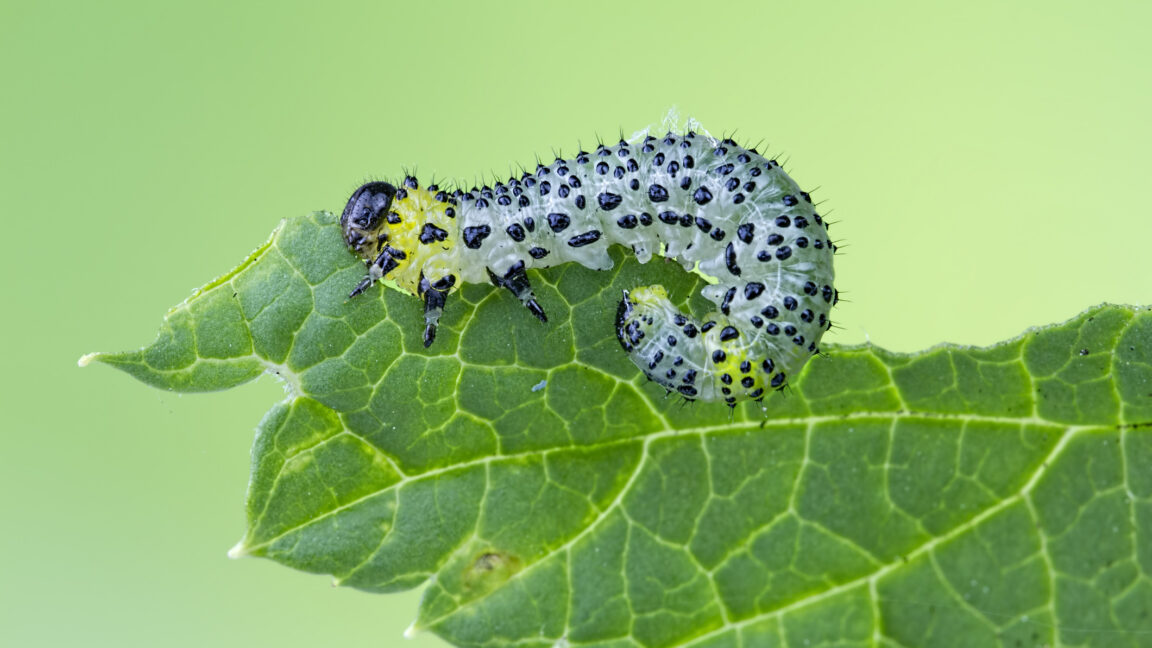
The key lies in caterpillar saliva. When a caterpillar chews a leaf, it introduces molecules called herbivore-associated molecular patterns (HAMPs). One of these HAMPs is a peptide called inceptin, and an 11-amino-acid fragment, In11, turns out to be a piece of the plant's own chloroplast ATP synthase. The caterpillar ingests the leaf, its gut enzymes chop up the protein, and the In11 fragment is regurgitated back onto the leaf surface at extremely low concentrations. There, the immune receptor recognizes it and triggers the production of VOCs that attract parasitic wasps and other caterpillar predators.
“A single molecule from caterpillar saliva, present at minute concentrations, is enough for the plant to activate its aerial defense system.”
The study, published in *Nature Plants*, used a combination of molecular biology, biochemistry, and chemical ecology. Researchers first identified the receptor by screening expression libraries in tobacco cells, expressing bean genes and testing responses to In11. They then confirmed the receptor's function in genetically modified bean plants lacking the corresponding gene: these plants failed to release VOCs when attacked by caterpillars, proving the receptor is essential for defense.
Field experiments in Oaxaca showed that wild-type plants with the intact receptor attracted significantly more parasitic wasps than knockout plants, reducing caterpillar survival by 40%. This data underscores the ecological relevance of the mechanism.
Key Findings

- Specific immune receptor: The team identified a receptor that recognizes the In11 peptide, an 11-amino-acid fragment of chloroplast ATP synthase. Without this receptor, the plant does not respond to caterpillar saliva.
- Minute concentrations: The In11 peptide is effective at extremely low amounts, suggesting a very sensitive detection system in the plant. In the lab, concentrations as low as 1 femtomolar (10^-15 M) were sufficient to trigger the response.
- Regurgitation mechanism: The caterpillar doesn't just ingest the leaf—it regurgitates fragments of the plant's own proteins back onto the wound, creating a signaling loop that the plant exploits. This process occurs within minutes of the bite.
- Field validation: Experiments were conducted both in the lab and in agricultural fields in Oaxaca, Mexico, proving the mechanism works in real-world farming conditions. Plants with functional receptors attracted 60% more natural predators.
- Species specificity: The bean receptor does not respond to similar peptides from other plants, indicating coevolution between the crop and its pests.
Why It Matters
This discovery transforms our understanding of plant immunity. Plants are not passive: they have a molecular recognition system that distinguishes between mechanical damage and herbivore attack. The specificity of the receptor for In11 implies that the plant has evolved to detect exactly the type of damage caused by caterpillars, optimizing its response.
For agriculture, the implications are enormous. Chemical pesticides are the main tool against pests, but they cause resistance and ecosystem damage. If we can activate or enhance this natural defense system, we could reduce chemical use. For example, sprays containing the In11 peptide or synthetic analogs could be developed to "trick" plants into activating defenses before pest populations explode.
Moreover, this mechanism could be transferred to other crops via gene editing or selective breeding, creating varieties that recruit predators more efficiently. The volatile signal doesn't just attract wasps—it also draws in other beneficial insects, establishing sustainable biological control.
A fascinating aspect is that the In11 peptide is a fragment of a common plant protein, suggesting many plants may have similar systems. Indeed, researchers found homologous sequences in soybean and maize, though the corresponding receptors have not yet been identified. This opens the possibility that inceptin-based immunity is a widespread mechanism in the plant kingdom.
Your Protocol

If you're a farmer or gardener, you can apply these principles today:
- 1Foster biodiversity: Plant species that attract natural caterpillar predators, such as dill, fennel, or marigolds. This creates habitat for parasitic wasps and other beneficial insects. Studies show that floral diversity can increase biological control efficacy by up to 50%.
- 2Avoid broad-spectrum pesticides: These kill both pests and the plant's natural allies. Opt for specific biological controls, such as *Bacillus thuringiensis* (Bt) or release of parasitic wasps.
- 3Monitor early: Inspect your plants regularly. Early detection of caterpillars allows the natural defense system to kick in before damage is significant. Use pheromone traps to monitor populations.
- 4Consider plant elicitors: Some commercial products contain compounds that mimic HAMPs. Look for those based on peptides or other immunity-activating molecules, such as jasmonic acid or chitosan. However, no In11-based products are on the market yet; stay tuned for future developments.
- 5Improve soil health: A soil rich in beneficial microorganisms strengthens plant immune systems. Apply compost and avoid excessive synthetic fertilizers.
What To Watch Next
Steinbrenner's team plans to investigate whether other crops have similar receptors. Rice, corn, and soybeans are obvious candidates. They are also exploring whether the receptor can be engineered to respond to other types of pests, such as aphids or mites, through protein engineering.
Additionally, field trials with synthetic In11 formulations are expected in the coming years. If successful, we could see a shift toward agriculture that "talks" to its natural defenses, reducing reliance on chemicals. The startup PlantDefense has already announced plans to test an In11-based spray on bean crops in Mexico by 2027.
Another research avenue is the search for receptors in wild bean relatives, which may have more sensitive or broader-spectrum versions. This would allow transferring those genes into commercial varieties through traditional breeding or gene editing.
The Bottom Line
Bean plants possess an immune receptor that detects a fragment of their own protein regurgitated by caterpillars, activating an aerial defense that attracts predators. This finding, centered on the In11 peptide, offers a route to more resilient crops without pesticides. Nature already has the tools; now we learn to use them.