
Your next neurofeedback session might have an unexpected prehistoric origin. A new study suggests Neanderthals weren't less intelligent than us, and that changes how we understand our own cognitive evolution.
The Science
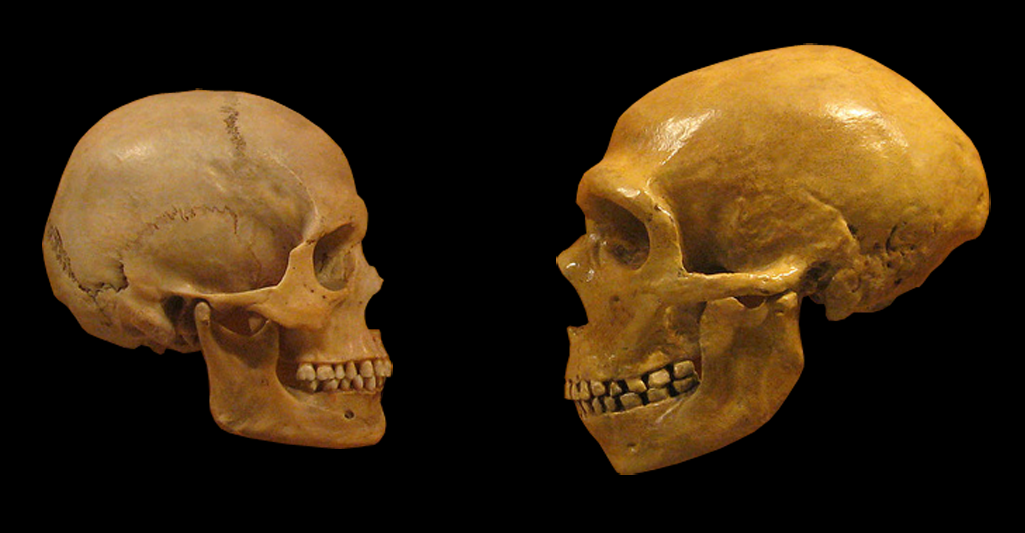
For years, researchers have debated whether Neanderthals possessed cognitive abilities similar to ours. The elongated, low shape of their skulls—contrasting with the globular skulls of modern humans—fueled speculation that their brains were different, perhaps inferior. However, a recent peer-reviewed study challenges this narrative.

The team compared MRI scans of modern human brains with endocasts (casts of the inside of the skull) from Neanderthals and Pleistocene Homo sapiens. The results are striking: brain size variation among modern humans is greater than the difference between Neanderthals and our Ice Age ancestors. In other words, an average Neanderthal could have a brain within the size range of a present-day human.
“Brain size is a terrible predictor of cognitive capability; structure and connectivity matter far more.”
Key Findings

- Within-species variation dominates: The brain size difference between two random modern humans can be larger than the difference between a Neanderthal and a Pleistocene sapiens. The study quantifies that the modern variation range exceeds the between-species gap.
- Endocasts as a tool: Researchers used CT scans of fossil skulls to create 3D models of the endocranial space, enabling direct comparisons with MRI from living people.
- Cognitive implications: Since brain size does not strongly correlate with intelligence (factors like neuronal density and synaptic connectivity are more relevant), Neanderthals likely possessed complex cognitive abilities, including language, symbolism, and planning.
- Consistent archaeological evidence: The findings align with the archaeological record showing Neanderthals made sophisticated tools, controlled fire, cared for their sick, and possibly practiced burial rituals.

Why It Matters
This study doesn't just change our view of Neanderthals—it has direct implications for modern neuroscience. If we assume human brain evolution was linear and progressive, we may be underestimating the plasticity and cognitive diversity within our own species.
For brain health enthusiasts and biohackers, the lesson is clear: brain size doesn't determine performance. The focus should be on neuroplasticity, myelination, dendritic spine density, and neural network efficiency. Practices like aerobic exercise, meditation, deep sleep, and cold exposure can enhance these factors, regardless of brain volume.
Moreover, the research suggests our species likely didn't outcompete Neanderthals by being smarter, but through other factors like social organization, demographics, or environmental luck. This invites reflection on how we measure evolutionary success—and by extension, success in our own health and longevity.
Your Protocol
Based on these findings, you can optimize brain function without obsessing over superficial metrics. Here are concrete steps:
- 1Prioritize connectivity over size: Engage in activities that foster neuroplasticity, such as learning a new language, playing an instrument, or dancing. These experiences strengthen neural networks.
- 2Monitor brain health with functional biomarkers: Instead of measuring brain volume (impractical), focus on processing speed, working memory, and heart rate variability (HRV) as indicators of cognitive health.
- 3Incorporate neuroprotective strategies: Cold exposure (cold showers, cryotherapy) increases brain-derived neurotrophic factor (BDNF), which promotes neuron survival and growth. Intermittent fasting also stimulates autophagy, clearing damaged proteins from the brain.
What To Watch Next
The next step in this research line will be analyzing not just size, but the shape and internal organization of Neanderthal brains. Scientists are developing techniques to infer connectivity from endocasts, which could reveal whether their frontal or parietal lobes had similar structure to ours.
Also expected are studies comparing the Neanderthal genome with human genetic variants linked to intelligence and mental health. Since many modern humans carry Neanderthal DNA (1% to 4% in people of European and Asian descent), some of those genes may influence our cognition today.
The Bottom Line
The Neanderthal brain was as varied as ours, and size is not synonymous with ability. Next time you hear about a supplement or technique promising to enlarge your brain, remember: true cognitive optimization lies in the quality of connections, not the volume of the organ. Evolution reminds us that intelligence flourishes in diversity, not uniformity.
Additional Context: Implications for Modern Neuroscience
This finding resonates with recent research on adult brain plasticity. For instance, studies of London taxi drivers show that the posterior hippocampus—a key region for spatial navigation—can increase in volume with experience, but what truly matters is the density of synaptic connections. Similarly, Neanderthals may have had differently organized but equally efficient brains.
Variability within modern humans also has clinical implications. Some individuals with microcephaly (small brain) have normal intelligence, while others with macrocephaly may have disabilities. This underscores that size is just a number; functional architecture is what counts.
Evolutionary Perspective: Why Did We Survive?
If Neanderthals weren't less intelligent, why did they go extinct? Current hypotheses point to factors like smaller populations, lower genetic diversity, or greater vulnerability to climate shifts. It's also possible that modern humans had advantages in large-scale social organization, enabling broader exchange networks and cooperation. This study reminds us that intelligence isn't the sole driver of survival.
Practical Applications in Daily Life
Beyond the protocol above, you can integrate habits that mimic the cognitive challenges of our ancestors. For example, navigating without GPS, cooking without recipes (improvisation), or learning manual skills like wood carving or knitting. These activities engage multiple brain networks simultaneously, promoting robust connectivity.
Social environment also matters. Neanderthals lived in small, cooperative groups; modern social isolation is a risk factor for cognitive decline. Maintaining meaningful relationships and participating in communities can be as neuroprotective as any supplement.
Emerging Research: The Neanderthal Genome and Cognition
Recent studies have identified genetic variants inherited from Neanderthals that influence traits like skin pigmentation, immune response, and potentially brain structure. For example, a Neanderthal allele in the NOVA1 gene affects RNA splicing in neurons, and its presence in modern humans is associated with differences in brain connectivity. Though early-stage, this research suggests our Neanderthal legacy continues to shape our cognition.
Final Reflection
Next time you feel frustrated about forgetting a name or having a "slow mental day," remember that intelligence isn't a fixed volume. It's a dynamic network you can strengthen with the right choices. Neanderthals teach us that cognitive diversity is a strength, not a weakness. And in a world that often values uniformity, embracing our internal variability may be the ultimate act of evolutionary biohacking.