
Your morning coffee might be about to get scientifically perfect.
A team at the University of Oregon has discovered that sending an electrical current through a cup of coffee reveals its flavor profile with unprecedented precision, opening the door to data-driven optimization for every coffee lover.
The Science
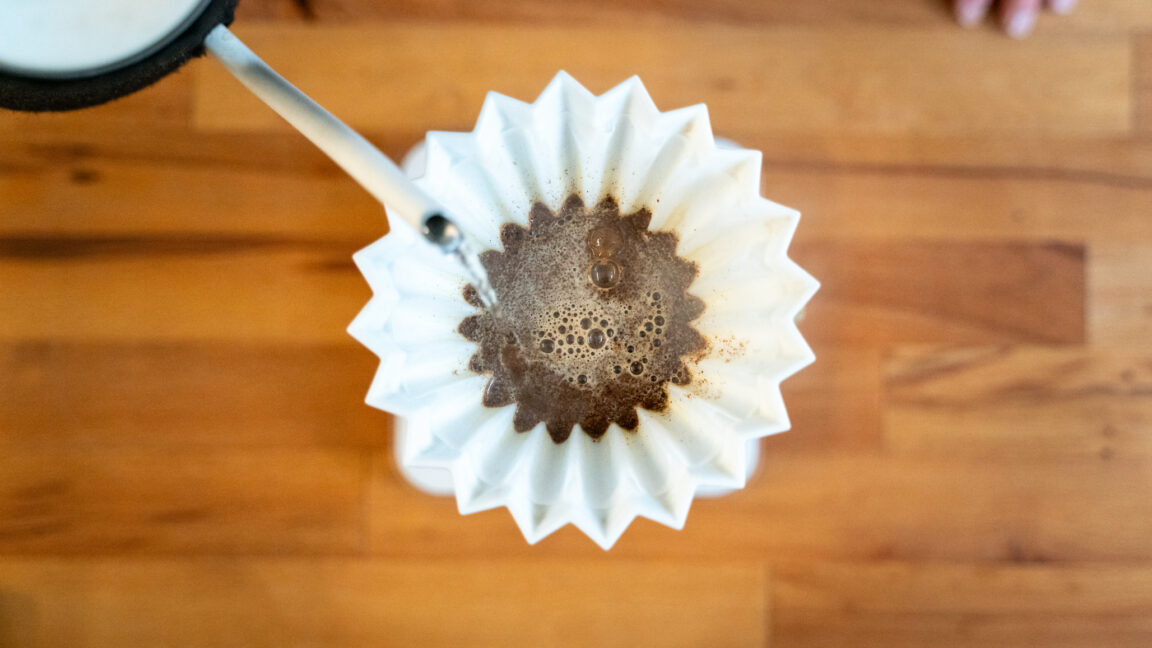
Chemist Christopher Hendon, known for his obsession with the perfect cup, has published a new study in *Nature Communications* showing that coffee's electrical conductivity correlates directly with its flavor profile. Coffee contains roughly 2,000 different compounds extracted during brewing, and until now measuring flavor was subjective or required complex chemical analysis.

The team found that the electrical current passing through the beverage reflects the concentration of dissolved ions, which in turn relates to flavor compounds. This allows baristas and enthusiasts to quantify extraction in real time, something previously only possible through indirect methods like extraction yield (EY), which measures the fraction of coffee that dissolves into the drink. Conductivity offers a more direct and rapid measurement, as charged ions (such as protonated caffeine and acids) move in response to the electric field, and their mobility depends on concentration and molecular size. This means a simple conductivity meter could replace expensive refractometers.
“Electrical conductivity of coffee could become the gold standard for measuring extraction quality, replacing subjective methods.”
Key Findings

- Predictive precision: Electrical conductivity strongly correlates with flavor compound concentration, allowing accurate prediction of taste profile. In the study, a correlation coefficient of R² > 0.9 was achieved between conductivity and total dissolved solids (TDS).
- 2,000 compounds: Coffee contains roughly 2,000 compounds contributing to flavor, and electrical current captures their presence collectively, without needing to identify each individually.
- Extraction yield (EY): This method complements EY, which depends on controlling water flow and pressure, offering a more direct and rapid measurement. While EY requires a refractometer and calculations, conductivity can be read in seconds with a simple sensor.
- Battery analogy: The model is based on how lithium ions propagate through battery electrodes, similar to how caffeine and other compounds dissolve from coffee grounds. This analogy allowed researchers to apply ion transport equations to predict extraction.

Why It Matters
For health enthusiasts and biohackers, this research has direct implications. Coffee is not just a stimulant but a rich source of antioxidants and bioactive compounds. Being able to precisely measure extraction means maximizing the release of these beneficial compounds while minimizing undesirable ones, such as excessive bitter chlorogenic acids or caffeine concentrations that may cause anxiety.
Moreover, reproducibility is key. Professional baristas struggle to replicate the same perfect cup due to variability in grind, temperature, and pressure. With this technique, anyone could adjust their brew to consistently achieve optimal coffee, both in flavor and nutritional profile. Imagine a smart coffee machine that automatically adjusts grind and temperature based on real-time conductivity, guaranteeing a perfect cup every time.
From a health perspective, a well-extracted coffee not only tastes better but may also have a more positive impact on cognition and metabolism thanks to a balanced concentration of caffeine and chlorogenic acids. Previous studies have shown that suboptimal extraction can leave behind bitter compounds that irritate the stomach, while over-extraction can release astringent tannins. Conductivity offers a window to avoid both extremes.
Your Protocol
Although the technique is not yet commercially available, you can apply the underlying principles to improve your coffee today.
- 1Measure your extraction yield: Use a coffee refractometer (like VST LAB III) to measure total dissolved solids (TDS). Multiply by beverage weight and divide by dry coffee weight to get EY. Aim for 18-22%. If you don't have a refractometer, you can estimate conductivity using a simple multimeter: submerge two stainless steel electrodes in the coffee and measure resistance; lower resistance indicates higher conductivity and higher extraction.
- 2Control your grind: A finer grind increases extraction surface area but can clog flow. Adjust coarseness to achieve a 25-30 second extraction time for espresso. For filter methods, aim for 3-4 minutes. Conductivity can help you calibrate: if conductivity is too low (under-extraction), grind finer; if too high (over-extraction), grind coarser.
- 3Monitor water temperature: Keep water between 90-96°C. Higher temperatures extract more compounds, including bitter ones; lower temperatures under-extract. Conductivity increases with temperature, so always measure at the same temperature (e.g., 25°C) for comparison.
- 4Experiment with pressure: If using an espresso machine, ideal pressure is 9 bars. Higher pressures can extract unwanted compounds and increase conductivity beyond the optimal range. Monitor the conductivity of the final brew to adjust pressure.
- 5Record your results: Keep a log of your parameters (grind, temperature, pressure, time) and the resulting conductivity. Over time, you can identify patterns that lead to your ideal cup.
What To Watch Next
Hendon's team is already working on a portable device prototype that measures coffee's electrical conductivity in real time, similar to a digital thermometer. If successful, it could be integrated into smart coffee machines to automatically adjust extraction parameters. Other research groups are expected to explore the relationship between conductivity and specific compounds like chlorogenic acids and trigonelline, potentially leading to personalized coffee profiles based on health goals. For example, a high-antioxidant profile might prioritize extraction of chlorogenic acids, while a low-caffeine profile could stop extraction before too much caffeine is released.
Additionally, the technique could be applied to other beverages like tea or hot chocolate, where compound extraction also determines flavor and health benefits. Electrical conductivity could become a universal tool for beverage optimization.
The Bottom Line
Electric current could revolutionize how we measure and optimize coffee, moving from subjective art to precise science. For the biohacker, this means another tool to fine-tune caffeine and antioxidant intake. Keep an eye on this development: your next cup might be the best you've ever had.


:format(jpg):quality(99):watermark(f.elconfidencial.com/file/a73/f85/d17/a73f85d17f0b2300eddff0d114d4ab10.png,0,275,1)/f.elconfidencial.com/original/4c3/f8d/788/4c3f8d788d2ad0eea91ae77f3ab33048.jpg)