Your immune system ages in predictable patterns. Understanding these changes enables precise interventions for long-term health optimization. Immunosenescence, the gradual deterioration of immune function with age, is not a random process but follows well-defined trajectories that modern science is beginning to map in detail. This knowledge transforms aging from a narrative of inevitable decline to an opportunity for proactive interventions. By integrating findings from longitudinal studies and multi-omic technologies, we can develop personalized strategies that not only mitigate the negative effects of immune aging but potentially reverse some aspects, promoting healthy and resilient longevity.

The Science
Longevity: Unlocking Age-Related Immune Dynamics

Multi-omic profiling analyzes multiple biological data layers simultaneously. This approach integrates genomics, transcriptomics, proteomics, and metabolomics to create comprehensive cellular function maps. Recent studies in healthy adults reveal consistent age-related immune dynamics patterns. For instance, a study published in Nature in 2026, involving over 1,000 participants followed for decades, identified specific molecular signatures associated with healthy versus pathological immune aging. These multi-omic data allow researchers to unravel the complex interactions between genes, proteins, and metabolites that drive immunosenescence, offering unprecedented insight into underlying mechanisms.

researcher analyzing multi-omic data visualization

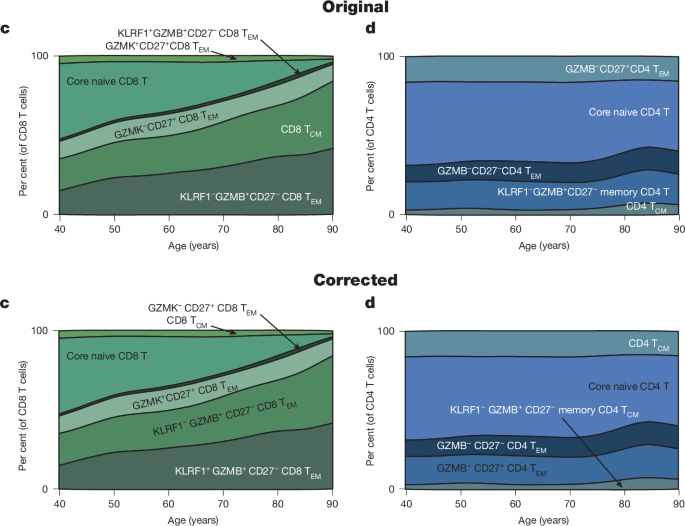
The author correction published in Nature on April 10, 2026 refines previous findings about these patterns. Researchers used longitudinal cohorts to track immune changes across decades. This work establishes crucial benchmarks for distinguishing healthy aging from early pathological processes. The correction clarified that certain inflammatory markers, such as high-sensitivity C-reactive protein (hs-CRP), show an average increase of 15% per decade after age 40 in healthy populations, but significant individual variations may indicate underlying risks. Furthermore, multi-omic studies reveal that mitochondrial dysfunction and oxidative stress play key roles in accelerating immunosenescence, providing targets for nutritional and lifestyle interventions.

Immunosenescence follows predictable patterns we can modulate.

Key Findings

Key Findings — longevity
Key Findings
  • Cellular Shifts: T-cell populations change systematically with each adult decade. Research shows that naive T cells decrease by approximately 5-10% per decade after age 20, while memory T cells increase, reducing the capacity to respond to new pathogens. This imbalance contributes to increased susceptibility to infections and less effective vaccine responses in older adults.
  • Inflammatory Tone: Low-grade inflammation markers progressively increase after age 40. Longitudinal studies indicate that elevated levels of hs-CRP and interleukin-6 (IL-6) are associated with accelerated aging and higher risk of chronic diseases. Chronic low-grade inflammation, or "inflammaging," is a central driver of immunosenescence and is linked to conditions such as cardiovascular disease, diabetes, and cognitive decline.
  • Immune Memory: Capacity for novel immune responses declines while existing memory persists. This results in immune "rigidity" where the system prioritizes responses to known pathogens over new challenges. Multi-omic data suggest this rigidity is related to epigenetic changes in immune cells, which can be modified through interventions like exercise and caloric restriction.
chart showing immune changes by age decade

Why It Matters

These findings transform how we approach immune aging. It's no longer inevitable decline but a process with identifiable intervention points. Health practitioners can now base recommendations on detailed maps of normal immune trajectories. For example, by monitoring specific markers like hs-CRP and T-cell counts, clinicians can identify early deviations from healthy trajectories and recommend personalized interventions. This represents a paradigm shift from a reactive approach of treating diseases to a proactive one of health optimization.

The practical implication is profound. We can develop age-personalized protocols that optimize immune function. This moves beyond disease prevention toward active promotion of immune resilience. The research provides the scientific framework for evidence-based longevity strategies. For instance, emerging studies show that interventions like intermittent fasting and NAD+ supplementation can positively modulate mitochondrial function in immune cells, potentially slowing immunosenescence. Additionally, integrating data from wearables and at-home tests will enable continuous monitoring, facilitating real-time adjustments to health protocols.

Your Protocol

Your Protocol — longevity
Your Protocol

Implement these steps based on immunosenescence science. Consistency drives optimal outcomes.

  1. 1Monitor inflammatory markers regularly after age 40. High-sensitivity C-reactive protein tests provide actionable data. Test every 6-12 months to track trends; levels above 3 mg/L may indicate chronic inflammation requiring intervention. Combine this with immune panels assessing T-cell counts and cytokine levels for a comprehensive view of your immune status.
  2. 2Incorporate weekly high-intensity interval training. This exercise modality positively modulates T-cell function. Studies show that 2-3 HIIT sessions per week of 20-30 minutes can increase naive T-cell production by 10-15% in older adults. Include strength training to maintain muscle mass, which is linked to better immune function through the release of anti-inflammatory myokines.
  3. 3Prioritize quality sleep with 7-8 hours nightly. Sleep deprivation accelerates age-related immune changes. Implement strict sleep hygiene: maintain a consistent schedule, avoid screens before bed, and create a cool, dark environment. Research indicates that sleep loss can increase inflammatory markers like IL-6 by 20-30%, underscoring its critical role in immune health.
  4. 4Optimize nutrition with anti-inflammatory foods. Consume a diet rich in omega-3 fatty acids (fatty fish, walnuts), polyphenols (berries, green tea), and fiber (vegetables, legumes). Studies suggest the Mediterranean diet can reduce hs-CRP levels by 15-20% in older adults. Consider supplements like vitamin D (1,000-2,000 IU daily) and curcumin (500 mg daily) after consulting a healthcare professional, as they show potential to modulate inflammation and support immune function.
  5. 5Manage stress through mindfulness techniques. Chronic stress elevates cortisol, which suppresses immune function. Practice meditation, yoga, or deep breathing for 10-15 minutes daily. Data indicate these practices can reduce inflammatory markers and improve NK cell activity, crucial for defense against infections and cancer.
older adult performing moderate exercise

What To Watch Next

Upcoming studies will focus on targeted interventions to reverse aspects of immunosenescence. Clinical trials will test combinations of exercise, nutrition, and supplementation. Emerging research will explore how different lifestyles affect individual immune trajectories. For example, ongoing studies are investigating the role of senolytics (compounds that clear senescent cells) in reducing age-related inflammation and restoring immune function. Others are examining how the gut microbiota influences immunosenescence through the gut-immunity axis, with implications for probiotic and dietary interventions.

Personalization represents the next frontier. Advances in wearables and at-home testing will enable continuous immune monitoring. This will facilitate real-time adjustments to health protocols based on individual responses. Technologies like wearable biosensors tracking inflammatory markers in sweat or saliva are in development, promising more accessible and frequent immune health surveillance. Additionally, artificial intelligence is being used to analyze multi-omic data and predict individual immune aging trajectories, paving the way for hyper-personalized recommendations.

The Bottom Line

The Bottom Line — longevity
The Bottom Line

Science now maps how your immune system ages. Use these insights to implement proactive strategies. The future of longevity lies in precise interventions informed by multi-omic data. By adopting a comprehensive approach combining regular monitoring, exercise, nutrition, sleep, and stress management, you can positively modulate your immune trajectory and promote a longer, healthier life. Ongoing research promises refinements in these strategies, making immune optimization a cornerstone of 21st-century preventive medicine.