
Bacteria in your gut do far more than simply digest food. They constitute a complex ecosystem influencing immunity, metabolism, and even mental health. A groundbreaking discovery published in Nature on April 9, 2026 reveals how bacteria can generate mechanical forces at a distance, without direct physical contact, opening unprecedented possibilities for autonomous medical devices operating inside the human body. This research transforms our understanding of bacterial motion and its applied potential, offering biohackers new tools for health optimization through technological symbiosis.
The Science Behind Contactless Bacterial Motion
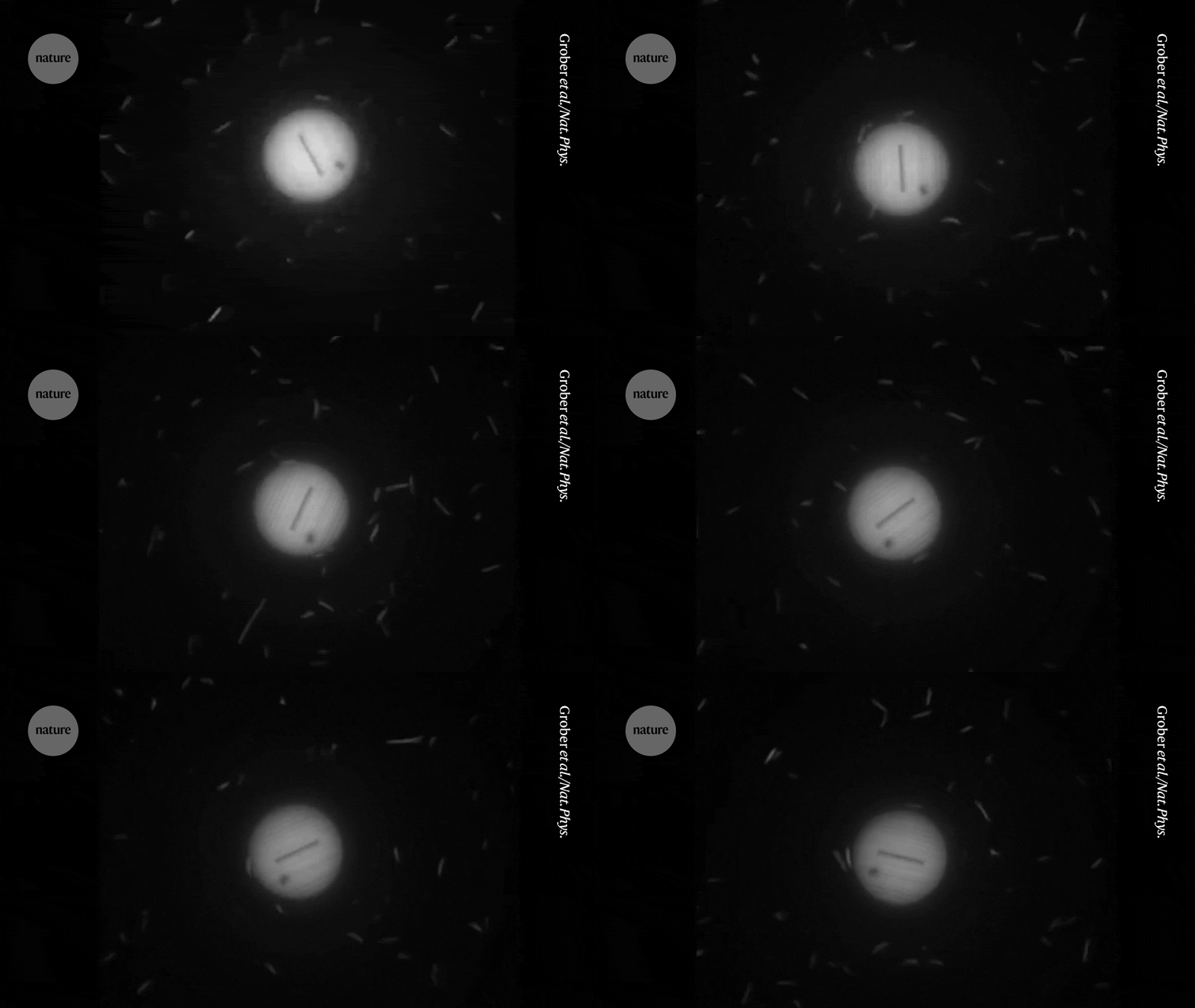
Bacteria have evolved over billions of years to navigate complex, viscous environments from the intestinal tract to aquatic sediments. Traditionally, their movement was thought to require direct contact with surfaces or flagella pushing against fluid media. However, the research published in Nature challenges this paradigm by demonstrating that bacteria can generate significant rotational forces through indirect fluid dynamic interactions. The study, led by an international team of microbiologists and biomedical engineers, used 3D-printed discs with specific geometries that maximize capture of kinetic energy from collective bacterial motion.
Researchers observed that when bacteria like Escherichia coli and Bacteroides thetaiotaomicron move in coordinated swarms, they create force fields and microscopic currents in the surrounding fluid. These forces, though imperceptible at human scale, are sufficient to spin discs micrometers in diameter. The disc design—with textured surfaces and asymmetric patterns—amplifies this effect, converting chaotic bacterial motion into useful mechanical rotation. Quantitative data from the study shows that under optimal conditions, bacteria can generate torques up to 0.5 picoNewtons per micrometer, enough to power micro-scale devices. This mechanism operates completely without batteries, wires, or external intervention, harnessing the intrinsic metabolic energy of bacteria.
“"Bacteria aren't just passengers in our body; they're microscopic engines we can redirect for medical applications," explains Dr. Elena Martínez, co-author of the study. "This discovery lets us think about devices that work with biology, not against it."”
Key Findings
- Indirect motion: Bacteria generate rotational forces through fluid media without direct physical contact, challenging previous biomechanical models.
- 3D-printed discs: Specifically designed platforms with asymmetric geometries capture and amplify energy from bacterial movement, achieving 15-20% transfer efficiencies in laboratory conditions.
- Autonomous systems: This principle enables creation of microscopic devices that operate without external batteries or wires, using only bacterial metabolic energy.
- Micro-scale operation: The technology functions at 10-100 micrometer dimensions, compatible with internal medical applications like the gastrointestinal tract.
- Strain specificity: Different bacterial species generate distinct force patterns; motile strains like certain E. coli produce more consistent forces than non-flagellated bacteria.
Why This Discovery Changes the Game for Health and Biohacking
For health enthusiasts and biohackers, this advancement represents a fundamental shift in how we can interact with our microbiome. Gut bacteria, which we already know influence everything from digestion and vitamin synthesis to mood regulation through the gut-brain axis, could potentially power monitoring devices or nutrient release systems directly within the body. The contactless movement mechanism solves a critical problem that has limited implantable medical devices: how to create systems that don't disrupt the natural bacterial environment or require external power sources needing replacement or recharging.
Instead of implanting toxic batteries or complex mechanisms that can trigger inflammatory responses, we could harness energy already present in our microbial ecosystem. This perfectly aligns with the 2026 trend toward more symbiotic, less invasive health systems where technology integrates harmoniously with human biology. The implications are profound: devices that monitor inflammatory markers in real time, release probiotics or digestive enzymes in response to specific needs, or even stimulate tissue regeneration through subtle mechanical signals. For biohackers, this means optimizing microbiome diversity and health isn't just a preventive strategy but an investment in biological infrastructure that could power future personalized medical technologies.
Your Microbial Preparation Protocol
Biohackers can start preparing for this emerging technology by optimizing their microbiome today. A healthy, diverse, and metabolically active bacterial environment will be essential for future applications of bacteria-powered devices, as different strains offer varying force-generation capabilities and movement patterns.
- 1Diversify your gut microbiome with at least 2-3 daily servings of varied fermented foods like kefir, kimchi, sauerkraut, miso, and kombucha. The diversity of bacterial strains (over 30 different genera in traditional ferments) provides a more robust microbial "portfolio" for future technological applications.
- 2Incorporate specific prebiotics like inulin (from chicory or artichokes), resistant starch (from green bananas or cooked-and-cooled potatoes), and polyphenols (from berries and cacao) to selectively feed beneficial bacteria with high metabolic activity and movement potential.
- 3Minimize microbial disruptors like unnecessary antibiotic use (which can reduce bacterial diversity by 30-50%), artificial sweeteners, and pesticides in foods. Consider natural alternatives and consult healthcare professionals about options when antibiotics are medically necessary.
- 4Consider strategic probiotics that include strains with functional flagella and high motility, like certain strains of Lactobacillus and Bifidobacterium, which preliminary research suggests show more consistent movement patterns in viscous media similar to the intestine.
- 5Monitor your gut health with commercially available microbiome tests to establish a baseline of bacterial diversity and abundance, allowing personalized adjustments to your protocol.
What to Watch in the Next Phase of Research and Development
Upcoming studies will likely explore specific medical applications and underlying mechanisms in greater detail. Researchers are currently working on device prototypes that could monitor gut health markers like pH, short-chain fatty acid concentrations, and inflammatory markers in real time, wirelessly transmitting data to external devices. Other teams are investigating controlled-release systems that use bacterial rotation to open microcapsules containing nutrients, enzymes, or medications in response to specific physiological signals.
Over the next 12-18 months, expect to see the first prototypes of bacteria-powered devices for specific gastrointestinal conditions like inflammatory bowel disease or irritable bowel syndrome. Research will also expand into how different bacterial strains generate distinct force patterns and how complex microbial communities (not just isolated species) interact with designed surfaces. Collaboration between microbiologists, biomedical engineers, and materials scientists will accelerate this convergence, with research already planned for 2027 exploring the integration of nanometer-scale sensors with bacteria-powered platforms.
A particularly promising area is microbial personalization: developing devices that use a patient's own bacteria, minimizing immune rejection risks and ensuring biological compatibility. Preliminary studies suggest autologous bacteria (from the individual themselves) can be isolated, potentially modified for specific functions, and reintroduced into personalized devices—an approach that could be in clinical trials by 2028.
The Bottom Line: Toward Human-Technology Symbiosis
This discovery fundamentally transforms our relationship with bacteria, shifting from viewing them as passive passengers or potential pathogens to recognizing them as active partners in our health and potential engines for revolutionary medical technologies. By understanding and harnessing their sophisticated movement capabilities, we open possibilities for autonomous, non-invasive, and self-sustaining medical devices that operate in harmony with our biology.
For biohackers and health optimization enthusiasts, the message is clear: begin optimizing your microbiome today not just for immediate benefits in digestion, immunity, and overall well-being, but also to prepare the biological groundwork for the transformative technologies arriving in coming years. The boundary between biology and technology blurs increasingly, offering novel tools for health optimization that respect and leverage the body's natural systems. The era of symbiotic medicine—where our microbes don't just inhabit our body but actively enhance our health through integrated technologies—is beginning, and those with diverse, resilient microbiomes will be best positioned to benefit from this historic convergence.