Bacteria in your gut do far more than simply digest food. They constitute a complex ecosystem influencing immunity, metabolism, and even mental health. A groundbreaking discovery published in Nature on April 9, 2026 reveals how bacteria can generate mechanical forces at a distance, without direct physical contact, opening unprecedented possibilities for autonomous medical devices operating inside the human body. This research transforms our understanding of bacterial motion and its applied potential, offering biohackers new tools for health optimization through technological symbiosis.
The Science Behind Contactless Bacterial Motion
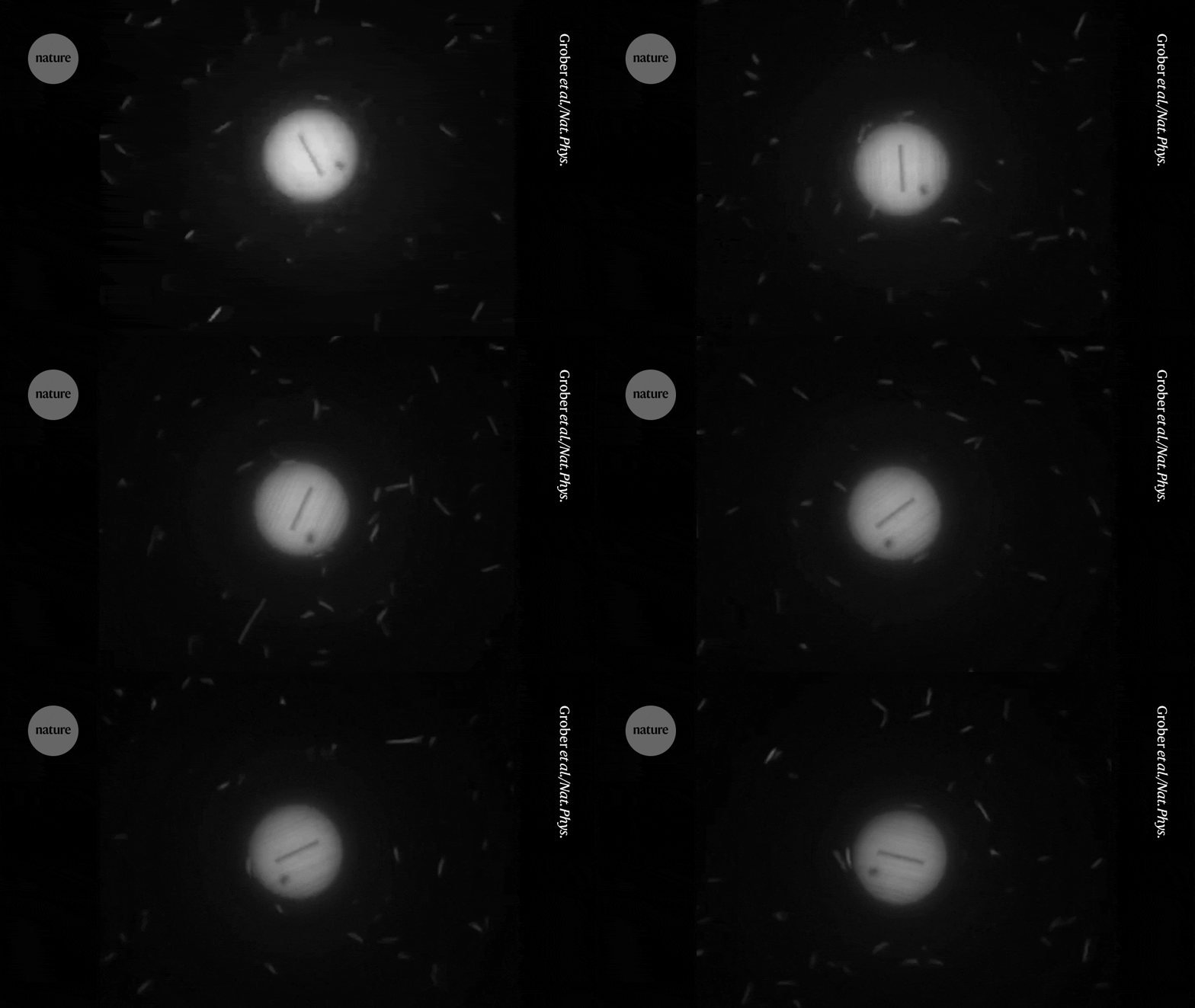
Bacteria have evolved over billions of years to navigate complex, viscous environments from the intestinal tract to aquatic sediments. Traditionally, their movement was thought to require direct contact with surfaces or flagella pushing against fluid media. However, the research published in Nature challenges this paradigm by demonstrating that bacteria can generate significant rotational forces through indirect fluid dynamic interactions. The study, led by an international team of microbiologists and biomedical engineers, used 3D-printed discs with specific geometries that maximize capture of kinetic energy from collective bacterial motion.

Researchers observed that when bacteria like Escherichia coli and Bacteroides thetaiotaomicron move in coordinated swarms, they create force fields and microscopic currents in the surrounding fluid. These forces, though imperceptible at human scale, are sufficient to spin discs micrometers in diameter. The disc design—with textured surfaces and asymmetric patterns—amplifies this effect, converting chaotic bacterial motion into useful mechanical rotation. Quantitative data from the study shows that under optimal conditions, bacteria can generate torques up to 0.5 picoNewtons per micrometer, enough to power micro-scale devices. This mechanism operates completely without batteries, wires, or external intervention, harnessing the intrinsic metabolic energy of bacteria.