
Your next biohacking tool might be inspired by a homing pigeon. Scientists have discovered that these birds use iron-rich immune cells in their livers to sense Earth's magnetic field—a finding that could reshape how we think about human sensory augmentation and open new avenues for biological optimization.
The Science
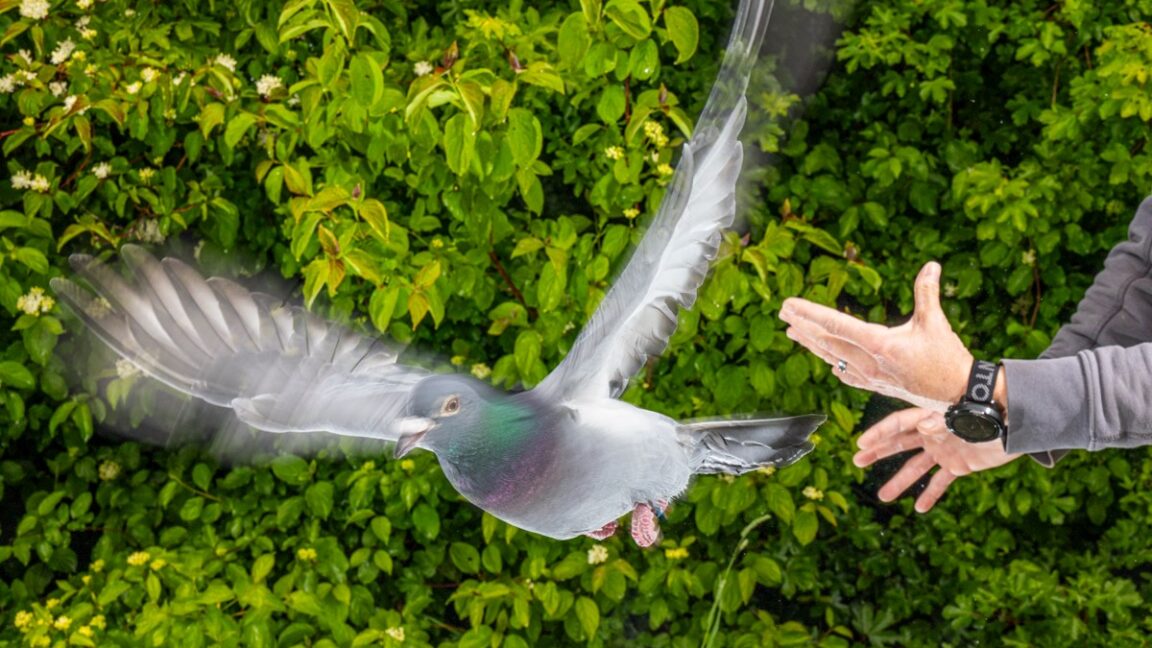
For decades, researchers have debated how migratory birds and homing pigeons navigate with pinpoint accuracy, especially at night or under overcast skies. Three main hypotheses competed: a compass-like mechanism in the upper beak, voltage-sensitive ion channels in cells, or photon-detecting retinal pigments. None fully explained the phenomenon. The scientific community was divided, with each hypothesis having its proponents and detractors.

A new study published in *Science* by researchers at the University of Bonn and University Hospital Bonn points to a fourth mechanism: immune cells called red pulp macrophages, located in the liver and spleen, accumulate large amounts of iron and become superparamagnetic. These cells, which break down old red blood cells, store iron as ferritin and hemosiderin, making them sensitive to weak magnetic fields like Earth's. Co-author Clivia Lisowski noted that a 2015 paper had already suggested these macrophages in mice and humans were superparamagnetic, but their role in magnetoreception was unknown. Now, the team has demonstrated that pigeons have a particularly high concentration of these macrophages in the liver, and that the magnetic signal is transmitted to the brain via the vagus nerve. This finding not only resolves a long-standing debate but also suggests that magnetoreception may be more common in the animal kingdom than previously thought.
“The pigeon liver acts as a biological magnetic detector, opening the door to new ways of augmenting human perception.”
Key Findings

- Unexpected location: The magnetic detector isn't in the beak or eyes—it's in the liver, where iron-rich macrophages act as sensors. This contradicts decades of research focused on the birds' heads.
- Superparamagnetic mechanism: Iron particles in the macrophages respond to weak magnetic fields without becoming permanently magnetized, allowing continuous and sensitive detection. This mechanism is different from a traditional compass.
- Neural connection: Information travels from the liver to the brain via the vagus nerve, a pathway humans also possess. This suggests the magnetic signal could integrate with other physiological processes.
- Evolutionary implications: This system may be present in other species, including mammals, suggesting a latent sensory ability that could be activated or enhanced.
- Iron concentration: Pigeon liver macrophages contain up to 10 times more iron than those in mice, explaining their higher magnetic sensitivity.

Why It Matters
This discovery transcends ornithology. If humans have similar macrophages in our livers and spleens—as previous mouse studies suggest—then we possess biological hardware for magnetoreception that could be activated or enhanced. For biohackers, this opens an entirely new frontier: the possibility of augmenting sensory perception beyond the traditional five senses. Imagine being able to sense the direction of north or detect variations in the local magnetic field—a skill that could have applications in navigation, exploration, and even enhancing spatial awareness.
Moreover, the finding underscores the importance of iron metabolism in cognitive and sensory function. Iron isn't just for oxygen transport; it could influence how we process environmental information. People with iron overload (hemochromatosis) or deficiency might experience differences in magnetic sensitivity, an area ripe for investigation. It also raises questions about how chronic inflammation or autoimmune diseases, which affect macrophages, could alter this latent ability.
Your Protocol
While we can't yet implant a magnetic navigation system like pigeons, we can optimize our biology to explore this latent capacity. Here's a practical protocol based on current evidence:
- 1Optimize iron metabolism: Keep ferritin levels in the optimal range (30-100 ng/mL for men, 20-80 ng/mL for women). Donate blood regularly if you have excess, or consume heme iron-rich foods (red meat, liver) if low, to influence macrophage function. Consider vitamin C to enhance non-heme iron absorption, and avoid tea or coffee with meals as they inhibit absorption.
- 2Stimulate the vagus nerve: Practice slow diaphragmatic breathing (5 seconds in, 5 seconds out) for 10 minutes daily, cold exposure (2-3 minute cold showers, or 10-15 minute ice baths), or singing/gargling to tone this nerve. A healthy vagus could improve transmission of any magnetic signals that exist. Meditation and yoga have also been shown to increase vagal tone.
- 3Monitor your magnetic environment: Use compass apps or magnetic field sensors (like those in some smartwatches) to notice variations. Keep a journal of how you feel in different locations; some people report mood or mental clarity changes near high-voltage power lines or mineral-rich geological formations. Also note the time of day and solar activity, as geomagnetic storms can affect Earth's magnetic field.
- 4Reduce chronic inflammation: Since macrophages are immune cells, systemic inflammation could interfere with their function. Adopt an anti-inflammatory diet (rich in omega-3s, fruits, and vegetables), sleep 7-9 hours, and manage stress with mindfulness techniques. Curcumin and resveratrol are supplements that may support macrophage health.
What To Watch Next
The Bonn researchers plan to explore whether human liver macrophages respond to magnetic fields in cell culture. If they confirm that our cells are also superparamagnetic, the next step will be behavioral experiments to see if humans can detect magnetic orientations without training. These experiments could involve orientation tasks in controlled environments, similar to those used with pigeons.
Also expected are studies investigating the link between magnetoreception and the immune system. Since macrophages are immune cells, chronic inflammation or autoimmune diseases could alter this ability. By 2027, we might see the first human trials using transcranial magnetic stimulation helmets to enhance detection, or even implants that amplify the magnetic signal.
Additionally, the biohacking industry is already speculating about wearable devices that could stimulate the vagus nerve in sync with external magnetic fields, creating a sort of artificial "sixth sense." Companies like Neuralink might show interest in this pathway, though it's still speculative.
The Bottom Line
Pigeons have given us a lesson in evolutionary biohacking. Their magnetic navigation system, based on liver immune cells, suggests that nature has already designed a biological magnetic sensor that may be latent in us. While science confirms whether humans share this ability, we can prepare our bodies by optimizing iron metabolism and vagal tone. The next great leap in human perception may not come from a chip, but from awakening a forgotten sense. The key is understanding that our biology already contains the tools; we just need to learn how to use them.
:format(jpg):quality(99):watermark(f.elconfidencial.com/file/a73/f85/d17/a73f85d17f0b2300eddff0d114d4ab10.png,0,275,1)/f.elconfidencial.com/original/19a/0c6/1a1/19a0c61a1a5c1c4850bafab7a82f6748.jpg)
:format(jpg):quality(99):watermark(f.elconfidencial.com/file/a73/f85/d17/a73f85d17f0b2300eddff0d114d4ab10.png,0,275,1)/f.elconfidencial.com/original/8d4/d81/564/8d4d8156462a6c0f027c30699fb3ee3d.jpg)
