
Your next Wi-Fi signal may depend on a rocket that failed two months ago. On June 4, Blue Origin will launch 48 satellites for Amazon's Kuiper broadband network—just weeks after a third-flight mishap left a customer payload in an unusable orbit. This isn't just a space industry story; it's a case study in risk tolerance, rapid recovery, and the infrastructure that will power your health-tracking wearables, telemedicine, and biohacking experiments from anywhere on Earth.
The Science
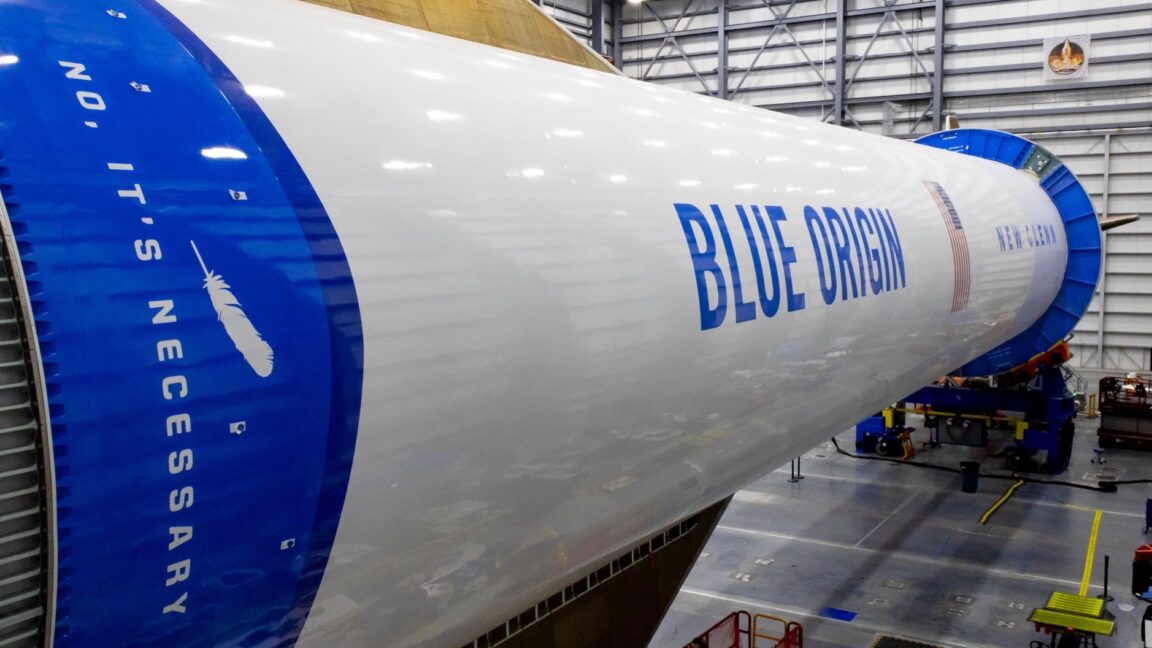
The New Glenn rocket, powered by seven BE-4 engines burning liquefied natural gas and liquid oxygen, represents a leap in heavy-lift capacity. But the science of reliability matters just as much. The failure on the third flight, less than two months ago, was investigated by the FAA and Blue Origin, with the probe closing on May 22. The speed of the investigation—barely weeks—suggests an identifiable, fixable cause rather than a fundamental design flaw. This matters because Amazon's Kuiper constellation, like SpaceX's Starlink, depends on frequent, reliable launches to deploy hundreds of satellites into low-Earth orbit.

This mission will carry 48 satellites, the most Amazon has ever launched on a single rocket, surpassing previous records on United Launch Alliance's Atlas V, SpaceX's Falcon 9, and Europe's Ariane 6. That's not just a logistical feat: each satellite contains sensitive electronics, solar panels, and propulsion systems that must survive launch and operate in vacuum. Materials science and redundancy engineering are critical. For the biohacker or health professional, the parallel is in wearable device reliability: a glucose sensor or sleep ring must work under adverse conditions, and its design benefits from the same failure-tolerance lessons.
“The ability to recover quickly from an orbital failure is as important as the technology that prevents it.”
Key Findings

- 48 satellites: Amazon's largest single-launch payload, surpassing previous records on Atlas V, Falcon 9, and Ariane 6.
- Failure investigated in 2 months: The third New Glenn flight incident was resolved in under 60 days, demonstrating rapid cause identification.
- Launch window: June 4, 2026 is the target date, pending engine test-firing in the coming days.
- Seven engines: New Glenn uses seven BE-4 engines fueled by LNG and liquid oxygen, a combination offering high efficiency but also complexity.

Why It Matters
High-risk space logistics isn't an abstract topic for the wellness reader. The Kuiper constellation promises low-latency internet in remote regions, enabling telemedicine, remote patient monitoring, and digital health applications that are currently infeasible due to lack of connectivity. Moreover, the ability to launch 48 satellites in one trip reduces per-unit costs, accelerating deployment of infrastructure that can save lives. For the biohacker, this means real-time data access from anywhere: from a fasting retreat in the desert to an altitude training expedition.
The mechanism here is barrier reduction. Each launched satellite is a node in a network that can transmit health data, emergency alerts, or software updates for medical devices. The rocket's reliability is therefore a public health factor. If New Glenn proves reliable, Amazon can deploy its network faster, competing with Starlink and driving prices down. This directly benefits rural clinics, field researchers, and athletes training in uncovered zones.
Your Protocol
While you can't launch a rocket, you can apply the principles of redundancy and rapid recovery to your own health. Just as Blue Origin investigates failures in weeks, you can monitor your metrics and adjust quickly.
- 1Set up early warning systems: Use a wearable that tracks heart rate, HRV, and temperature. Configure alerts for deviations of 10% from your baseline. If something fails (like poor sleep or a stress spike), investigate the cause within 48 hours, not months.
- 2Redundancy in critical data: Don't rely on a single device. If you monitor glucose, have a backup meter. If you use a sleep ring, complement with a manual log. Redundancy eliminates blind spots.
- 3Scheduled stress tests: Just as New Glenn performs an engine test-fire before flight, you can do controlled stress tests: a sauna session followed by cold water, or a 24-hour fast. Measure your response and adjust your protocol.
What To Watch Next
The June 4 launch will be closely watched by the space and digital health industries. If successful, it could open the door to bi-weekly New Glenn launches, accelerating Kuiper deployment. By 2027, we could see coverage in regions that currently lack internet, enabling large-scale population health studies. Additionally, Blue Origin plans crewed flights, which could bring research labs to space to study cellular aging in microgravity.
Also worth following is the competition between Amazon and SpaceX. If Kuiper deploys fast, satellite internet prices will drop, making telemedicine accessible in rural areas of Latin America and Africa. That's a game-changer for health equity.
The Bottom Line
A rocket that fails and recovers in two months isn't a minor technical note: it's a demonstration that risk tolerance, when combined with rapid investigation, can accelerate progress. For your health, the lesson is clear: monitor, adjust quickly, and don't fear failures if you learn from them. The future of digital health is in orbit, and every successful launch brings you closer to a world where your doctor can see you from anywhere.
Implications for Global Health
The deployment of the Kuiper constellation will not only improve connectivity in remote areas but also enable population-scale health data collection. For example, in sub-Saharan African regions with scarce internet coverage, community health workers can use wearables to monitor vital signs and send real-time alerts. This could reduce maternal and child mortality rates by facilitating early interventions. Additionally, the low-latency satellite network will allow telemedicine consultations with specialists in urban centers, democratizing access to healthcare.
The Rapid Recovery Factor
Blue Origin's ability to investigate and resolve the failure in under two months is a model for other industries. In health, this translates to the importance of early problem detection and rapid solution implementation. For instance, if a medical wearable fails, the manufacturer must identify the root cause and release a firmware update within weeks, not months. This agility can prevent adverse events and improve user trust.
Your Resilience Protocol
Beyond the steps above, consider incorporating a "failure mode" into your health routine. Just as rockets have backup systems, you can design a plan B for when your routine is disrupted. For example, if you cannot exercise due to injury, have a stretching or meditation routine. If your wearable runs out of battery, have a manual method to record data. The key is to anticipate and prepare.
Looking Ahead
The success of the June 4 launch could mark the beginning of an era of frequent, low-cost launches. By 2028, Kuiper is expected to have over 3,000 satellites in orbit, providing global coverage. This will not only transform telecommunications but also enable real-time health research from anywhere on the planet. For example, scientists could monitor the spread of infectious diseases using wearable data, improving epidemic response.
In summary, Blue Origin's orbital rescue is more than a space story: it's a reminder that resilience and adaptability are key in both space exploration and personal health care.

:format(jpg):quality(99):watermark(f.elconfidencial.com/file/a73/f85/d17/a73f85d17f0b2300eddff0d114d4ab10.png,0,275,1)/f.elconfidencial.com/original/ff1/a83/5a8/ff1a835a8a1b6f4656d6694b94ff3abb.jpg)
