
Octopus Brain: Unlocking a Second Path to Intelligence
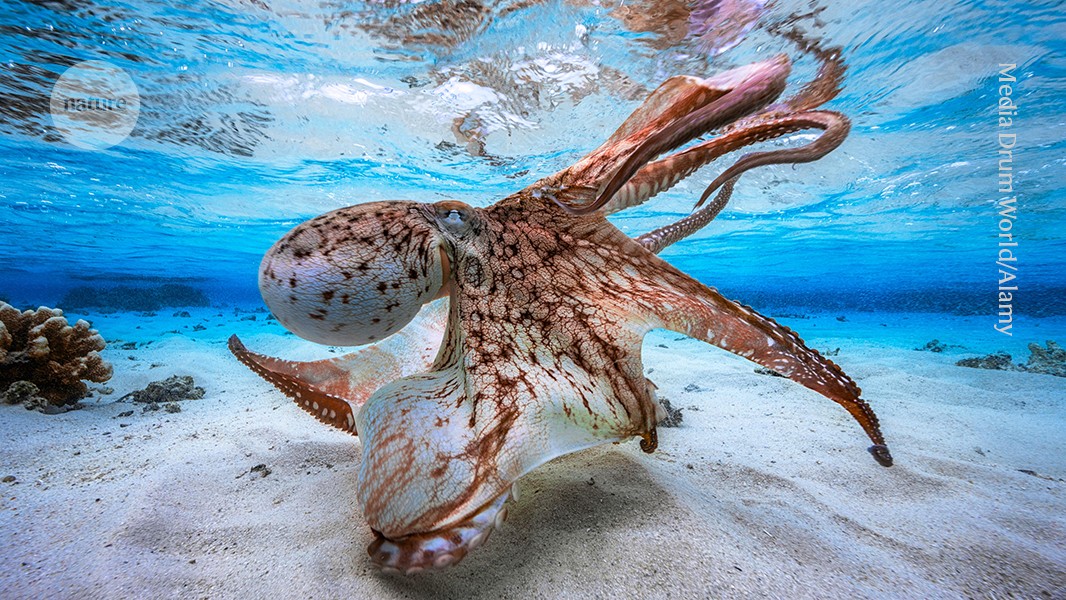
Your next cognitive optimization ally might have eight arms. Octopuses and squid are reshaping neuroscience, offering an alternative model of intelligence that challenges our assumptions about how brains work. As biohackers constantly seek new ways to enhance memory, focus, and neuroplasticity, studying these mollusks could provide radically different strategies from those based on vertebrate neuroscience.
The Science

A *Nature* article published April 29, 2026, reveals that cephalopods—octopuses, squid, and cuttlefish—possess brains as elaborate as those of vertebrates. Neuroscientists are flocking to these animals for insights into how intelligence evolved. The study, which does not provide specific numerical data, focuses on the unique neural architecture of these mollusks, highlighting that their decentralized nervous system may be key to their astonishing cognitive abilities.

Unlike vertebrates, whose central nervous system is concentrated in the brain, cephalopods have a more decentralized neural distribution. Each octopus arm contains its own mini-brain, suggesting an alternative way to process information. This organization could inspire new strategies to enhance brain plasticity and cognition in humans. For instance, the ability of octopuses to solve complex problems in parallel could translate into training techniques that foster cognitive multitasking without overwhelming the brain.
:format(jpg):quality(99):watermark(f.elconfidencial.com/file/a73/f85/d17/a73f85d17f0b2300eddff0d114d4ab10.png,0,275,1)/f.elconfidencial.com/original/c4d/483/669/c4d4836694b49cf847e6a1f341f2822b.jpg)
:format(jpg)/f.elconfidencial.com%2Foriginal%2Fe79%2F572%2Fc65%2Fe79572c656e0200d1fee647ea4d66172.jpg)
