The world's first permanent nuclear waste repository is almost ready.
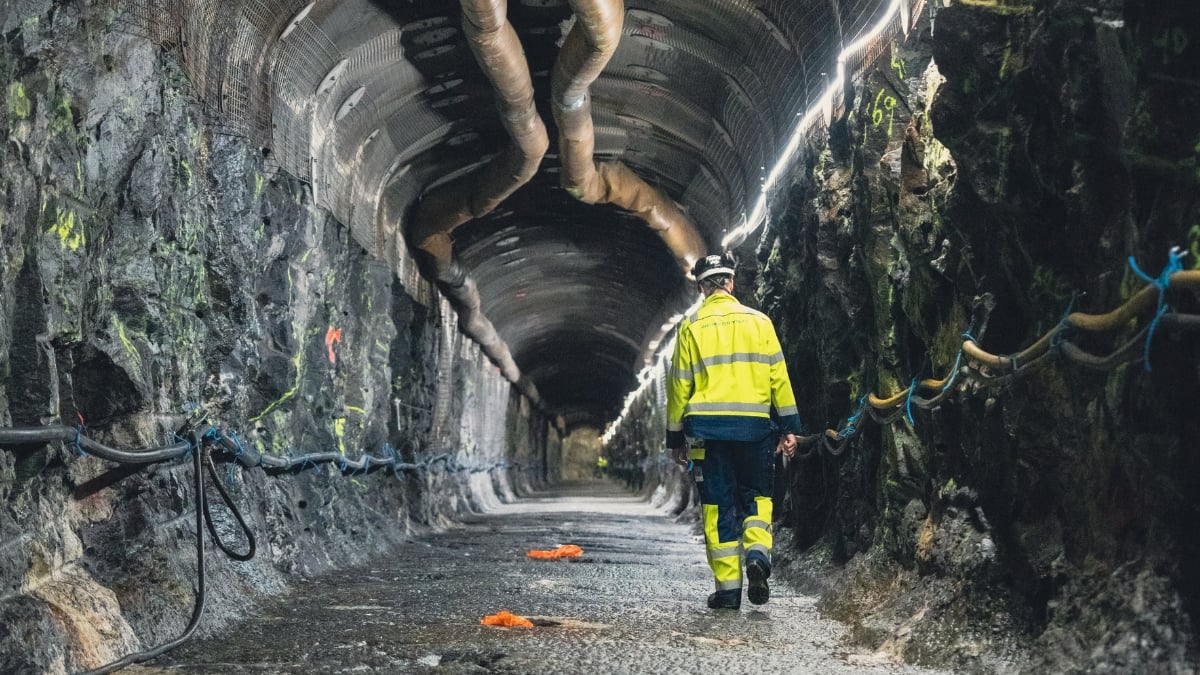
A 450-meter-deep shaft in the Finnish bedrock will hold spent nuclear fuel for 100,000 years. This is Onkalo, the planet's first geological tomb for radioactive waste. Conceived in the 1980s, the project represents the culmination of decades of research into radioactive waste management. The central question: Are we truly prepared to seal something away for a period that exceeds all of modern human history?
The Science Behind Onkalo


Onkalo, Finnish for 'cavity', is a deep geological repository designed to isolate radioactive waste from the biosphere until its hazard decays to natural levels. The project, led by the company Posiva, began construction in 2004 and is expected to be operational in 2026. The principle is straightforward but ingenious: bury the spent fuel 450 meters underground in a granite bedrock that has been stable for millions of years. Granite is chosen for its low permeability and high mechanical strength, making it an ideal natural barrier.
The storage method involves encapsulating the fuel rods in copper and cast iron canisters, which are then placed in holes drilled in the floor of underground tunnels. Once filled, the tunnels are sealed with bentonite, a clay that expands on contact with water, creating an impermeable barrier. The repository can hold up to 6,500 tonnes of uranium, equivalent to all the spent fuel from Finland's nuclear power plants over their lifetime. The multi-layer design ensures that even if one barrier fails, the remaining ones maintain isolation.
“The greatest challenge isn't technical but social: ensuring that information about the waste's location is passed down for 100,000 years. How do we communicate with future civilizations that may not understand our languages?”
Key Findings
- Depth: 450 meters underground, in granite bedrock stable for millions of years. This depth isolates waste from surface phenomena like glaciations or erosion.
- Capacity: 6,500 tonnes of uranium, equivalent to Finland's entire nuclear output. The repository has room for expansion if needed.
- Sealing material: Bentonite clay, which expands on contact with water to create a watertight seal. Its swelling capacity can reach up to 10 times its dry volume.
- Lifespan: 100,000 years, the time needed for radioactivity to decay to safe levels. This period is based on the half-lives of the longest-lived isotopes, such as plutonium-239 (24,000 years) and neptunium-237 (2.14 million years).
- Cost: Approximately €3.5 billion, funded by Finnish electricity companies through a special fund. This covers research, construction, and operation for several decades.

Why It Matters for Health and the Environment

Onkalo represents a milestone in nuclear waste management, a problem that has dogged the industry since its inception. Until now, spent fuel has been stored in cooling pools or dry casks on the surface—temporary solutions requiring ongoing monitoring and maintenance. A deep geological repository offers a permanent solution, eliminating the need for active human oversight. This significantly reduces the risk of accidental radiation exposure, which can cause cancer, genetic mutations, and other health damages.
For countries with nuclear programs, such as the United States, France, and Japan, Onkalo is a model to follow. However, implementation faces political and social hurdles. In the U.S., the Yucca Mountain project in Nevada has been stalled for decades by local opposition and legal disputes. Onkalo shows it is possible, but it requires strong social consensus and long-term commitment. It also raises ethical questions: Do we have the right to impose risks on future generations? How do we ensure they remember the location of these wastes?
Your Protocol: Lessons from Onkalo for Personal Risk Management
While you may not be building a nuclear repository, there are lessons for long-term risk management in your own life. Onkalo's philosophy is based on redundancy, long-term planning, and intergenerational communication. Here is a practical protocol:
- 1Plan for long timescales: Don't just think about next year; think in decades. Invest in health (regular exercise, balanced diet, medical check-ups), continuous education, and enduring relationships. Just as Onkalo was designed for 100,000 years, you can design a health plan for the next 30-40 years.
- 2Use multiple layers of safety: Just as Onkalo uses copper, bentonite, and rock, you can diversify your investments (don't put all eggs in one basket) and health systems (combine conventional medicine with preventive care). For example, besides health insurance, maintain an emergency fund and healthy habits that reduce the need for medical care.
- 3Document and communicate: Passing information to future generations is key. Write down your values, wishes, and medical knowledge in a document you can share with family. Just as Onkalo engineers debate how to mark the site to prevent disturbance, you can leave clear instructions about your treatment preferences and care.
What To Watch Next in Nuclear and Health
The next big project is Sweden's repository at Forsmark, expected to be operational in the 2030s. France and Switzerland are also advancing their own repositories, while countries like Japan and South Korea evaluate geological options. In health research, studies on the effects of radiation on the human body continue, with work on exposure limits and treatments for internal contamination. For instance, the use of chelating agents like EDTA to remove radioactive heavy metals from the body is in experimental stages. Additionally, chronic low-dose radiation exposure remains an area of scientific debate, with implications for nuclear workers and populations near storage sites.
The Bottom Line
Onkalo is a testament to human ability to solve complex problems with foresight. It not only protects the environment but sets a standard for intergenerational responsibility. The next time you think about nuclear waste, remember that the solution may be 450 meters underground, sealed forever. And perhaps, by reflecting on its design, you can apply some of its lessons to your own life: plan long-term, use multiple layers of safety, and communicate your intentions to those who come after.