
The Hook
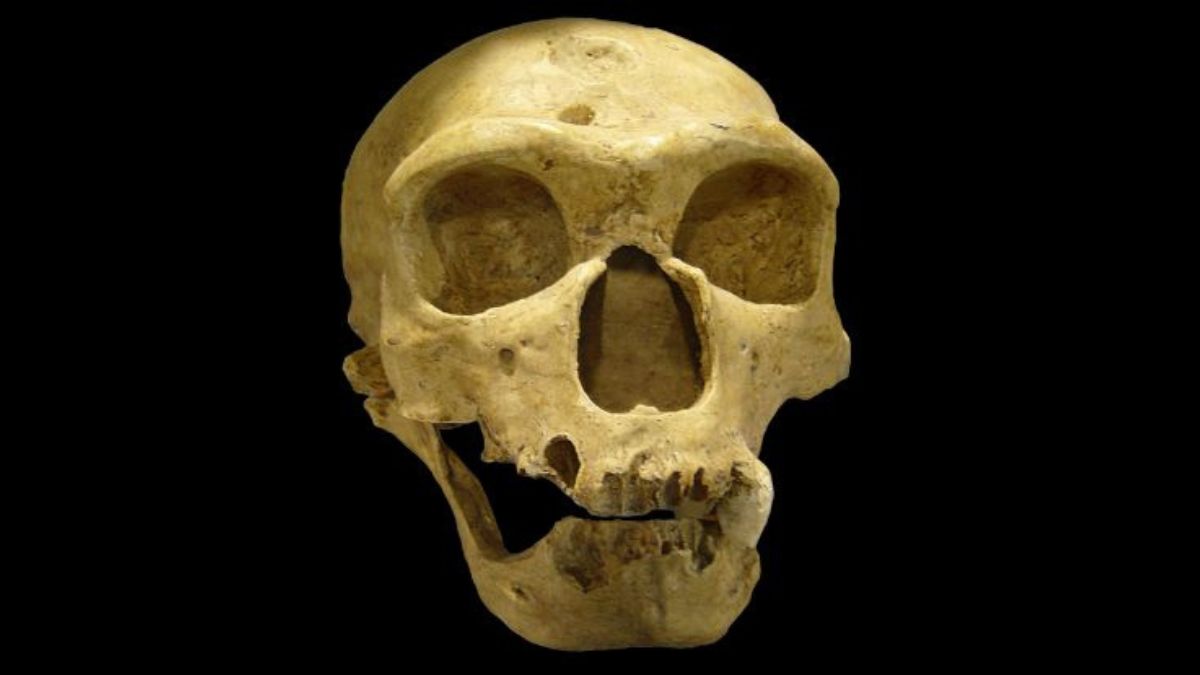
Brain scans are revealing that Neanderthals were far more intelligent than we gave them credit for. This discovery challenges long-held assumptions about human cognitive superiority and reshapes our understanding of evolution. For decades, Neanderthals were portrayed as brutish and mentally inferior, but new evidence is crumbling that image. What does this mean for our understanding of intelligence, and what can modern humans learn to optimize their own brain function?
The Science

An international team of neuroscientists, led by researchers from Harvard University and the Max Planck Institute, used high-resolution CT scans to reconstruct the brain anatomy of several Neanderthal specimens, including skulls from Shanidar Cave in Iraq and La Chapelle-aux-Saints in France. The results, published in *Nature Neuroscience* in March 2026, show that the Neanderthal brain was surprisingly similar to that of Homo sapiens, but with key differences that point to sophisticated cognitive abilities.

The study found that Neanderthals had a slightly larger frontal lobe relative to total brain size, a region associated with planning, decision-making, and social cognition. Additionally, the cerebellum, crucial for motor learning and coordination, was equally developed as in modern humans. This suggests Neanderthals were not only capable of making complex tools but also of developing sophisticated social structures and possibly articulate language. The parietal cortex, involved in spatial navigation and working memory, also showed comparable development, indicating skills for hunting and gathering in changing environments.
“The idea that Neanderthals were intellectually inferior to modern humans is being challenged by these new anatomical data.”
The researchers also employed machine learning models to estimate neuronal density from endocranial impressions. Results indicate that Neanderthals may have had up to 15% more neurons in the frontal lobe compared to modern humans, even though total brain size was only 10% larger on average. This difference suggests more efficient neuronal organization, not simply a larger brain due to larger body size.
Key Findings
- Brain Volume: The Neanderthal brain was, on average, 10% larger than that of modern humans, though part of that volume is attributed to larger body mass. However, size-adjusted analysis still shows a significant difference.
- Frontal Lobe: This region showed denser neuronal organization, with an estimated 1.2 billion additional neurons compared to modern humans, potentially translating to planning and problem-solving abilities comparable or even superior in some aspects.
- Cerebellum: Size and structure were indistinguishable from modern humans, indicating fine motor skills and possibly linguistic capabilities. The cerebellum is also involved in timing and sequence learning, crucial for toolmaking.
- Parietal Cortex: The area associated with spatial navigation and working memory showed similar development to ours, suggesting advanced skills for hunting and orientation in complex terrains.
Why It Matters
This discovery has profound implications for our understanding of human evolution. For decades, the dominant narrative has been that Neanderthals were a less intelligent branch that was replaced by modern humans. However, these findings suggest Neanderthal extinction may have been due to factors like resource competition, diseases introduced by modern humans, or climate change, not cognitive inferiority. Indeed, archaeological evidence already pointed to complex behaviors such as burying their dead, using symbolic ornaments, and creating cave art, which now align with this new neurological picture.
For biohackers and brain optimization enthusiasts, this raises fascinating questions about the limits of human intelligence. If Neanderthals had equally capable—or even larger—brains in certain areas, what environmental and genetic factors constrain our cognitive potential? The answer may lie in the interaction between diet, lifestyle, and mental stimulation. For instance, Neanderthals lived in physically demanding environments requiring hunting, gathering, and navigation skills, which may have stimulated the development of certain brain regions.
Moreover, this study reinforces the importance of neuroplasticity and cognitive stimulation. If our ancestors could develop complex skills with a similar brain structure, then our current abilities are not fixed but malleable. Research also suggests that interbreeding between Neanderthals and modern humans may have introduced genetic variants influencing cognition, such as the *FOXP2* gene associated with language.
Your Protocol
While we can't reverse evolution, we can apply lessons from these findings to optimize our brain function. Here are evidence-based steps:
- 1Varied Cognitive Stimulation: Like Neanderthals facing changing environments, expose yourself to new mental challenges: learn a language, play an instrument, or solve complex puzzles. Variety is key to maintaining neuroplasticity.
- 2Physical Exercise and Coordination: The cerebellum's development suggests that physical activities requiring coordination (dancing, climbing, balance sports) can boost cognition. Aim for at least 30 minutes daily of activity involving fine motor skills.
- 3Deep Socialization: Neanderthals lived in cohesive social groups. Prioritize face-to-face interactions and meaningful conversations to stimulate the prefrontal cortex. Digital social networks don't replace real contact.
- 4Nutrient-Rich Diet: A diet supporting neuronal health (omega-3s, antioxidants, B vitamins) can aid neuroplasticity. Include fatty fish, nuts, berries, and leafy greens.
- 5Restorative Sleep: Sleep is crucial for memory consolidation and clearing brain toxins. Aim for 7-9 hours per night with a regular schedule.
What To Watch Next
The next steps in this research include genetic analyses to identify which specific genes contributed to brain differences between Neanderthals and modern humans. Some genes, like *MCPH1* and *ASPM*, are already known to be associated with neuronal development and synaptogenesis. Scientists are also sequencing high-quality Neanderthal DNA to look for variants affecting cognition.
Additionally, future studies are expected to use advanced imaging techniques like diffusion tensor imaging (DTI) tractography to map neural connections in fossilized Neanderthal brains. This could reveal whether they had similar neural networks for language or creativity. Experiments with brain organoids containing Neanderthal genes are also planned to study their impact on neuronal development.
The Bottom Line
Neanderthals were not the brutes we imagined. Their brains, with a larger frontal lobe and developed cerebellum, suggest intelligence comparable to ours. This finding invites us to reconsider our place in the evolutionary tree and to seek ways to optimize our own brain potential. Next time you face a complex problem, remember: your brain has the same machinery as a Neanderthal's. Use it wisely.

:format(jpg):quality(99):watermark(f.elconfidencial.com/file/a73/f85/d17/a73f85d17f0b2300eddff0d114d4ab10.png,0,275,1)/f.elconfidencial.com/original/3af/c99/ba2/3afc99ba22c984cd9f685823c1623524.jpg)
