
A 30-meter titan has just emerged from the Thai soil. This sauropod, the largest dinosaur ever found in Southeast Asia, rewrites paleontological history and raises fascinating questions about how organisms achieve massive growth without metabolic collapse. For biohackers seeking to optimize bone density and longevity, the secrets of these giants may be more relevant than you think.
The Science
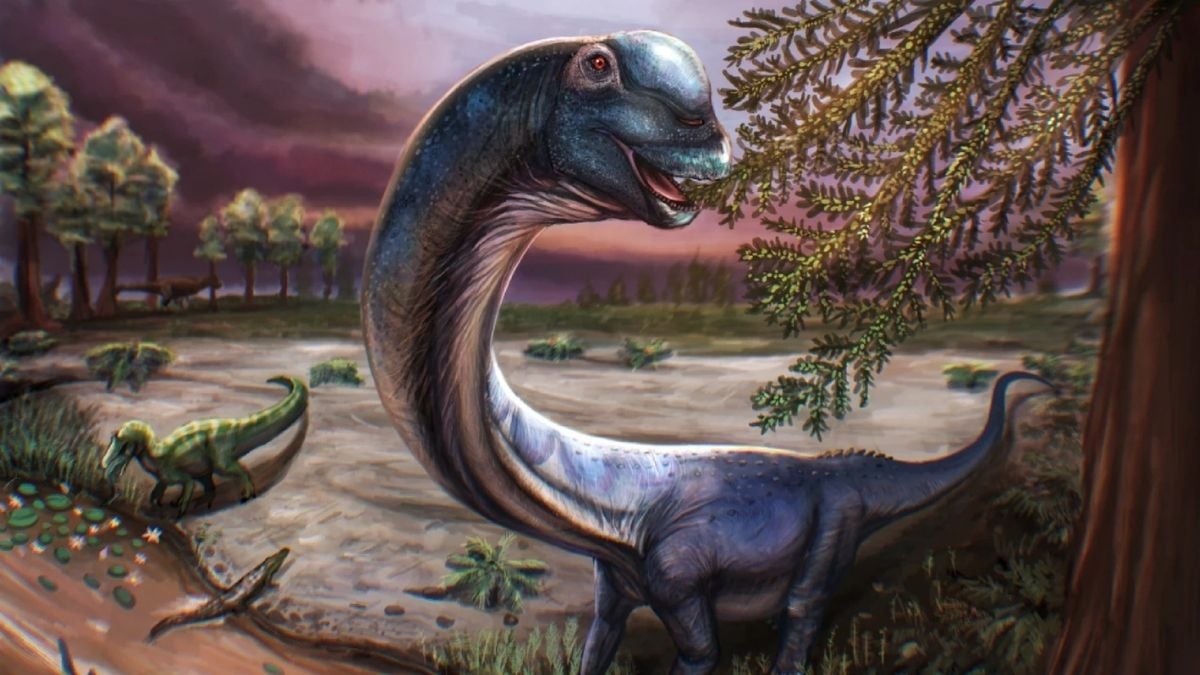
The fossil, discovered in Nakhon Ratchasima province, belongs to a sauropod of the genus *Phuwiangosaurus* and dates back about 130 million years. With an estimated length of 30 meters and a weight that could exceed 30 tons, it is the largest dinosaur ever found in Southeast Asia. Researchers, led by paleontologist Sita Manitkoon, identified partial cervical and dorsal vertebrae, as well as a 2-meter-long femur. This find not only expands our understanding of sauropod distribution in Asia but also provides a new benchmark for studying the limits of skeletal growth in terrestrial vertebrates. Stratigraphic dating and isotope analysis place the specimen in the Early Cretaceous, a time when dinosaurs reached their peak diversity and size.

What truly matters for human health is not the size, but how these animals grew so rapidly without developing bone diseases like osteoporosis or stress fractures. Previous studies on sauropods suggest they had an exceptionally efficient basal metabolism and continuous bone remodeling—processes now being investigated for applications in regenerative medicine. The estimated growth rate of these dinosaurs reached 2-3 centimeters per day during juvenile stages, a pace that would dwarf average human growth, which is only about 0.1 mm per day during the adolescent growth spurt. This accelerated growth capacity implies perfect coordination between bone matrix deposition, vascularization, and nutrient supply—something scientists have yet to replicate in humans. Additionally, sauropods possessed a bird-like air sac system that allowed efficient gas exchange and a lighter skeleton, reducing metabolic stress. These adaptations could offer clues for designing therapies to accelerate fracture healing or combat age-related bone loss.
“The extreme bone growth of sauropods challenges human metabolic limits and offers a model for tissue regeneration.”
Key Findings

- Record size: 30 meters in length and a 2-meter femur, the largest in Southeast Asia. This size places *Phuwiangosaurus* among the largest sauropods globally, comparable to species like *Argentinosaurus*.
- Fossil age: Approximately 130 million years old, from the Early Cretaceous. This period saw the expansion of sauropods across all continents.
- Growth rate: Estimated at 2-3 cm/day in juvenile phases, based on growth line studies in fossil bones. These lines, similar to tree rings, allow age and growth speed calculations.
- Metabolic implication: Sauropods had a circulatory and respiratory system adapted to sustain enormous body masses, with bird-like lungs. This provided continuous oxygen supply and efficient thermoregulation.

Why It Matters
The connection between dinosaurs and biohacking is not as far-fetched as it seems. Sauropods solved a problem that human medicine still faces: how to build and maintain strong bones without overloading metabolism. In humans, peak bone density is reached around age 30, followed by a slow but steady decline. Dinosaurs, however, maintained active bone remodeling throughout their lives—something longevity researchers call "skeletal plasticity." This plasticity allowed them to repair microfractures and adapt to changing loads, a process that becomes less efficient in humans with age.
The exact mechanisms remain unknown, but they are thought to involve signaling pathways like insulin-like growth factor 1 (IGF-1) and growth hormone, both implicated in human longevity. A 2024 study in *Nature* suggested that giant dinosaurs had mutations in DNA repair genes, which may have reduced their cancer risk despite their enormous cell count. For biohackers, this implies that activating DNA repair pathways (such as sirtuins or the Nrf2 pathway) could be key to long-term bone health. Moreover, recent research in mice has shown that overexpression of certain DNA repair genes can increase bone density and delay osteoporosis. Although we are far from applying these findings in humans, the path is laid out.
Your Protocol
While we cannot make our bones grow 2 cm per day, we can apply principles from dinosaur biology to optimize bone density and longevity:
- 1Intermittent mechanical loading: Sauropods bore enormous loads while walking. Current evidence shows that high-impact exercises like jumping or weightlifting stimulate osteoblasts. Perform 3-4 sets of jumps daily (10 reps) or strength training 2-3 times per week. Variety is key: combine compression exercises (like squats) with traction exercises (like pull-ups) to stimulate different bone types.
- 2Nutritional support: Ensure adequate intake of calcium (1000-1200 mg/day), vitamin D (2000-4000 IU/day), and vitamin K2 (100-200 mcg/day). Dinosaurs obtained these from mineral-rich plants; today, supplements can help. Also consider magnesium (400 mg/day) and zinc (15 mg/day), which are cofactors in bone mineralization. Vitamin D is especially critical in regions with low sunlight; a blood test can determine your optimal level.
- 3Intermittent fasting: Dinosaurs likely went long periods without eating. Fasting activates autophagy and reduces inflammation, which favors bone remodeling. Try a 16:8 or 14:10 fasting schedule. Human studies show that intermittent fasting can increase growth hormone levels and improve insulin sensitivity, both beneficial for bone health. However, ensure adequate caloric intake during eating windows to avoid bone loss.
What To Watch Next
The Thai team plans to perform CT scans of the bones to study internal microstructure and compare it with modern mammals. Additionally, genomic analyses of living relatives (such as birds and crocodiles) are expected to be published in 2027 to identify key genes in bone growth. These studies could reveal therapeutic targets for osteoporosis and other bone diseases.
Meanwhile, the longevity startup *Biosplice* is developing a drug that mimics sauropod IGF-1 signaling, with Phase II clinical trials for osteoporosis scheduled for 2027. If successful, it could revolutionize treatment for age-related bone loss. Other companies, like *AgeX Therapeutics*, are exploring cellular reprogramming to rejuvenate bone tissue. The future of bone biohacking might be written in 130-million-year-old bones.
The Bottom Line
The discovery of the largest dinosaur in Southeast Asia is not just a paleontological marvel; it is a window into the limits of biological growth. For longevity enthusiasts, these giants offer lessons on maintaining strong bones over decades. Applying their principles—mechanical loading, strategic nutrition, and fasting—could be the first step toward bone health that defies age. The future of bone biohacking might be written in 130-million-year-old bones.
:format(jpg):quality(99):watermark(f.elconfidencial.com/file/a73/f85/d17/a73f85d17f0b2300eddff0d114d4ab10.png,0,275,1)/f.elconfidencial.com/original/19a/0c6/1a1/19a0c61a1a5c1c4850bafab7a82f6748.jpg)
:format(jpg):quality(99):watermark(f.elconfidencial.com/file/a73/f85/d17/a73f85d17f0b2300eddff0d114d4ab10.png,0,275,1)/f.elconfidencial.com/original/8d4/d81/564/8d4d8156462a6c0f027c30699fb3ee3d.jpg)
