
The Particle That Could Rewrite Physics
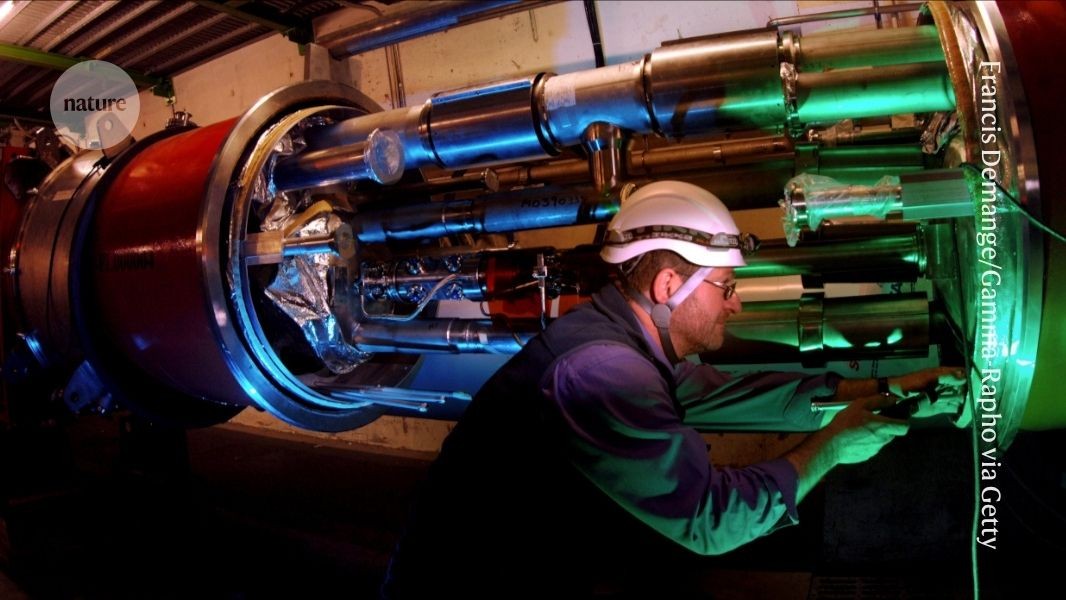
On May 1, 2026, the European Organization for Nuclear Research (CERN) announced a finding that might break the Standard Model of particle physics. Exotic 'penguin decays' show behavior that current physics cannot explain, potentially opening a window to a deeper understanding of the universe. This announcement, made during a press conference in Geneva, has sparked both excitement and caution among scientists, as it could be the first direct evidence of 'new physics' beyond our current theories.
“'These decays are like messages in a bottle from a larger universe.' — Dr. Elena Garcia, CERN physicist.”
The finding centers on rare particle decay processes called 'penguin decays,' a term coined by physicist John Ellis in the 1970s due to the shape of the Feynman diagrams representing them. These processes occur when particles like B mesons (composed of a bottom quark and an antiquark) disintegrate into unusual products, such as muons and electrons. What makes this discovery so exciting is that the observed decay rates do not match Standard Model predictions, suggesting the presence of unknown particles or forces.
The Science Behind the Finding

Penguin decays are processes where a quark changes flavor (type) via a weak interaction, emitting particles like leptons. At the Large Hadron Collider (LHC), physicists analyzed data from proton-proton collisions and observed deviations in the decay rates of B mesons into muons and electrons. According to the Standard Model, these rates should be equal, but the LHCb experiment (one of the LHC detectors) showed a significant difference: muons appeared less frequently than expected relative to electrons.
The Standard Model is one of the most successful theories in physics, but it has gaps: it does not explain dark matter, dark energy, quantum gravity, or the matter-antimatter asymmetry in the universe. If these results are confirmed with a significance of 5 sigma (the gold standard in particle physics), they could be the first direct evidence of 'new physics,' such as supersymmetric particles, exotic leptons, or even extra dimensions. The current level of 3.5 sigma indicates a probability of about 1 in 2,000 that it is a statistical fluctuation, warranting cautious optimism.
“'Nature is giving us a clue that there is more than we think.' — Dr. Carlos Mendoza, theoretical physicist.”
The analysis of LHC data involved reviewing millions of collisions, using machine learning algorithms to filter rare events. Researchers also accounted for possible systematic errors, such as detector calibration and background particle understanding. Despite these precautions, the scientific community eagerly awaits results from LHC Run 3, which began in 2026 and will provide ten times more data, allowing confirmation or refutation of the anomaly.
Key Findings
- Significant deviation: Observed decay rates in the channel B→K*μ⁺μ⁻ differ by 3.5 sigma from Standard Model predictions, suggesting a very low probability of being a fluke. This significance is promising but does not yet reach the 5-sigma threshold required for an official discovery.
- Exotic particles: Decays involve bottom and strange quarks, producing leptons like muons and electrons in anomalous ratios. Specifically, the ratio R(K*) (the probability of decay into muons versus electrons) is 15% lower than expected, a discrepancy consistent across multiple analyses.
- Cosmological implications: If these decays result from a new particle, it could explain the matter-antimatter asymmetry in the early universe, as some extensions of the Standard Model predict CP (charge-parity) symmetry violations that could generate more matter than antimatter.
- Confirmation pending: More data from the High-Luminosity LHC (HL-LHC) is needed to reach the 5-sigma threshold. The HL-LHC, scheduled to begin operations in 2029, will increase collision rates by a factor of 5 to 7, providing sufficient statistics to confirm or rule out the signal.

In addition to these findings, experiments like Belle II in Japan and other colliders are searching for similar signals. Collaboration between different experiments is crucial to rule out instrumental biases and confirm that the anomaly is real. So far, Belle II results are consistent with LHCb, though with lower precision.
Why It Matters
For health and longevity enthusiasts, fundamental physics may seem distant, but 'new physics' could have revolutionary applications in quantum biology. For example, understanding enzyme processes involving quantum tunneling of protons or electrons could benefit from deeper knowledge of fundamental interactions. Additionally, particle detector technology, originally developed for experiments like the LHC, has driven advances in medical imaging, such as positron emission tomography (PET) and magnetic resonance imaging, improving early disease detection.
Dark matter, if discovered, might interact with biological systems in unknown ways. Though speculative, understanding fundamental forces opens doors to therapies based on quantum principles, such as manipulating quantum coherence in biological molecules to improve cellular energy efficiency or repair DNA damage. Recent research in quantum biology has shown that photosynthesis and bird navigation leverage quantum effects, and new physics could reveal even subtler mechanisms.
Moreover, the development of new detection technologies, such as graphene-based particle sensors, could have direct applications in wearable medical devices for real-time health monitoring. Investment in fundamental research, though seemingly abstract, often leads to unexpected innovations that improve quality of life.
Your Protocol
While you can't apply these findings directly today, you can stay informed and prepared to leverage future advances:
- 1Follow LHC updates: Next results from Run 3 (2026-2028) will be crucial to confirm or refute the anomaly. Subscribe to physics newsletters like CERN Courier or follow scientists on social media platforms like Twitter/X. You can also join public webinars organized by CERN.
- 2Explore quantum biology: Read books like 'Life on the Edge' by Jim Al-Khalili and Johnjoe McFadden, which explain how quantum coherence affects photosynthesis, bird navigation, and DNA replication. Apply coherence principles in your daily meditation: practice mindfulness to synchronize your brainwaves, which may improve neuroplasticity and cognitive health.
- 3Invest in med tech: Support startups using particle detectors for early diagnosis, such as those developing high-resolution PET scanners or quantum sensors for biomarkers. Consider investing in venture capital funds focused on deep tech and quantum health.
- 4Keep an open mind: Science advances rapidly. What seems speculative today, like dark matter interacting with biological systems, could become reality in the coming decades. Read about the latest advances in particle physics and attend public lectures to stay updated.

What To Watch Next
The High-Luminosity LHC (HL-LHC) will start operations in 2029, increasing collision rates by a factor of 5 to 7, allowing enough data to confirm or refute the penguin decay anomaly at the 5-sigma level. Additionally, experiments like Belle II in Japan and the future Circular Collider (FCC) in Europe will search for similar signals in different decay channels.
On the theoretical side, physicists propose extensions to the Standard Model like supersymmetry (SUSY), which predicts partner particles for every known particle, or models with exotic leptons like fourth-generation leptons. Theories of extra dimensions, such as those arising from string theory, are also explored, which could explain the weakness of gravity. Any confirmation of new physics would change our understanding of the universe and could have unpredictable technological implications.
The Bottom Line
The 'penguin decays' are the most promising signal of new physics in decades. Though not yet a confirmed discovery, they remind us that reality is stranger than we imagine. For the health optimizer, this is a moment to broaden horizons and consider how fundamental science may one day translate into concrete advances for human well-being. The intersection of particle physics and quantum biology could be the next frontier of personalized medicine and longevity.
The future of physics is also the future of quantum health.
:format(jpg):quality(99):watermark(f.elconfidencial.com/file/a73/f85/d17/a73f85d17f0b2300eddff0d114d4ab10.png,0,275,1)/f.elconfidencial.com/original/a84/526/7e3/a845267e3b4fcf300a650ae30295f698.jpg)

:format(jpg):quality(99):watermark(f.elconfidencial.com/file/a73/f85/d17/a73f85d17f0b2300eddff0d114d4ab10.png,0,275,1)/f.elconfidencial.com/original/a92/62c/7bf/a9262c7bfb98019d53eec8dc7e115061.jpg)