
A dolphin cuts through the ocean at speeds that defy simple physics. New research from the University of Osaka, published in Physical Review Fluids, reveals the secret isn't just raw power—it's how they manage the vortices they create. This breakthrough not only explains the efficiency of these marine mammals but also provides a blueprint for optimizing human movement and designing bio-inspired technologies.
The Science Behind the Mystery
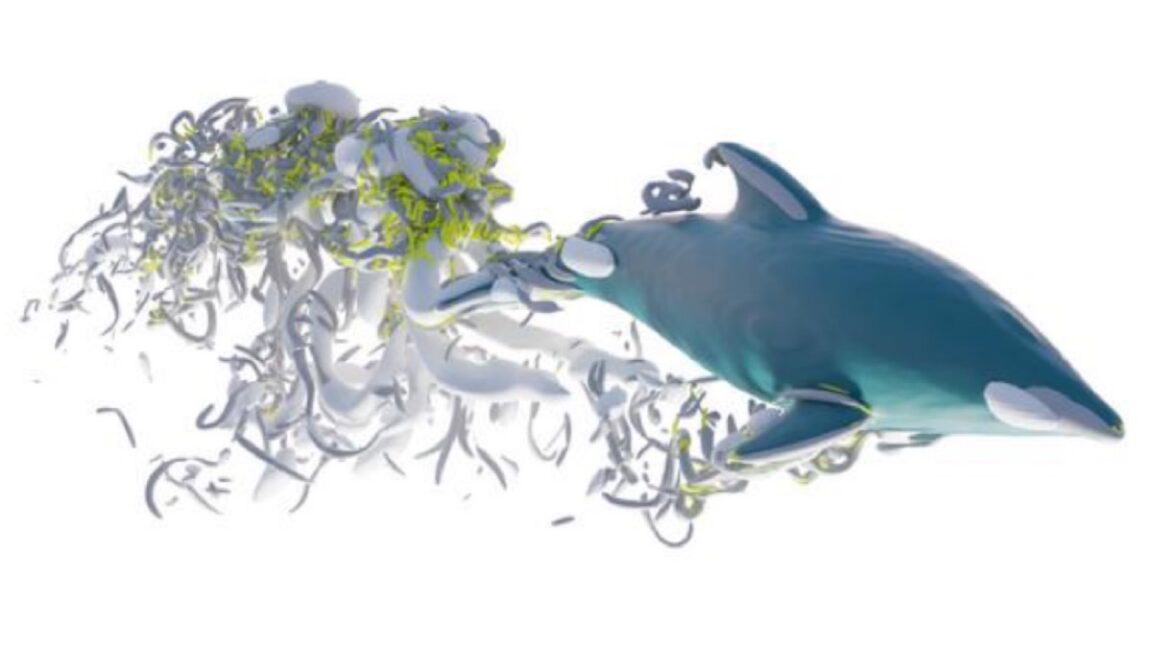
Dolphins are extraordinary swimmers, reaching speeds up to 30 km/h with remarkable agility that has fascinated scientists for decades. For years, the exact propulsion mechanism remained unclear because direct observation in the ocean couldn't measure the forces involved with precision. Japanese researchers used supercomputer simulations to model a dolphin's tail movement, analyzing the vortices—or eddies—generated with each kick. They discovered that the up-and-down motion produces vortices of varying sizes: large vortex rings created during initial oscillations and smaller vortices that follow. The large rings generate most of the thrust, while the small ones contribute little to forward motion.

The study quantified that large vortices account for approximately 80% of total thrust, with smaller ones being inefficient byproducts that dissipate energy without benefit. This detailed understanding, impossible to obtain in the wild, was achieved through computational fluid dynamics (CFD) simulations that decompose vortex scales. The researchers modeled the dolphin's tail as a flexible surface oscillating at specific frequencies and amplitudes, then analyzed how each vortex scale contributes to net momentum. The results are striking: the dolphin's propulsive efficiency critically depends on synchronizing large vortex generation while minimizing small ones.
“The dolphin's speed secret isn't brute force—it's intelligent management of the eddies it creates.”
Key Findings

- Large vortices as thrusters: Initial tail oscillations generate large vortex rings that produce 80% of forward thrust. These rings act like impellers, sucking water in and expelling it backward, creating a net force.
- Small vortices as noise: Smaller eddies, though numerous, do not contribute to movement and represent wasted energy. Their formation is inevitable, but the dolphin minimizes their impact through tail shape and rhythm.
- Supercomputer simulation: The study used high-resolution CFD models to visualize and measure each vortex scale's contribution, a first in marine biology. Simulations revealed that the ratio of large to small vortices varies with oscillation frequency, suggesting dolphins adjust their technique based on desired speed.
- Biomimetic implications: Findings can inspire more efficient swimming fins, underwater drones, and propulsion systems. For example, an artificial fin mimicking the dolphin's flexibility and oscillation pattern could enhance performance for swimmers and vehicles.

Why It Matters for Your Health and Performance
For biohackers and athletes, understanding how dolphins optimize propulsion offers direct lessons applicable to human swimming. Human swimming relies heavily on muscle strength, but this study suggests that technique—generating large vortices while avoiding small ones—could improve efficiency by 20-30%, according to preliminary researcher estimates. Elite triathletes and swimmers could benefit from training that mimics the dolphin's oscillation pattern, emphasizing broad, controlled kicks over rapid, short ones. This not only improves speed but reduces energy expenditure, enabling longer workouts and faster recovery.
Beyond sports, the research has rehabilitation applications: prosthetic fins for amputees could be designed to maximize large vortices, improving mobility and reducing fatigue. In longevity science, energy-efficient movement reduces metabolic stress and joint wear, potentially lowering injury risk and improving quality of life in older age. Vortex science also applies to pulmonary ventilation and blood flow, where fluid optimization is critical for cardiovascular and respiratory health. For instance, understanding how vortices affect airflow in lungs could improve breathing techniques for asthmatics or athletes.
Your Practical Protocol for Swimming Like a Dolphin
- 1Train with broad, controlled movements: When swimming, focus on long, deep kicks that generate a single large vortex, rather than quick, shallow ones. Use long fins (like scuba fins) to feel the difference in resistance and momentum. Perform 100-meter sets of dolphin kick, maintaining maximum amplitude and reducing frequency to one kick every 2 seconds. Rest 45 seconds between sets. This trains your body to generate efficient vortices and minimize wasted energy.
- 2Incorporate variable resistance exercises: Use a resistance band anchored at the pool edge to simulate water resistance. Perform dolphin kicks against the resistance, focusing on the downward thrust phase. Do 3 sets of 20 reps, with 1 minute rest. This strengthens muscles involved in large vortex generation (glutes, quads, and core).
- 3Visualization and sensory feedback: Before each session, close your eyes and imagine your body creating a large eddy behind you that propels you forward. Neuroscience shows visualization activates the same neural networks as actual movement, improving coordination. During swimming, pay attention to the water sensation: look for constant, even pressure on your feet, a sign you're generating a large vortex. If you feel erratic turbulence, reduce kick frequency.
What To Watch Next
The Osaka team plans to expand simulations to include multiple dolphins swimming in pods, which could reveal how they leverage each other's vortices to save energy—a phenomenon known as "drafting" in cycling but still poorly understood in water. They are also developing a prototype artificial fin based on the findings, with human trials expected by 2027. Another research line explores whether these principles apply to human gait, especially in runners, where movement efficiency is key for athletic longevity. Early models suggest running technique could be optimized by generating "vortices" in air (though less dense) through arm and leg movements. Additionally, results are expected to influence wind turbine and propeller design, where vortex management is crucial for efficiency.
The Bottom Line: Fluid Intelligence of Movement
Dolphins teach us that speed isn't just about strength—it's about fluid intelligence: the ability to manage the medium around us to maximize momentum and minimize waste. Applying their principles to our swimming, equipment design, and rehabilitation could be the difference between average and exceptional performance. Next time you swim, remember: chase the big vortex, not the small ones. Your body will thank you with greater efficiency, less fatigue, and perhaps a personal best.
:format(jpg):quality(99):watermark(f.elconfidencial.com/file/a73/f85/d17/a73f85d17f0b2300eddff0d114d4ab10.png,0,275,1)/f.elconfidencial.com/original/3dc/af8/9f6/3dcaf89f697fb773c0cdf8c8a9102d9f.jpg)
:format(jpg):quality(99):watermark(f.elconfidencial.com/file/a73/f85/d17/a73f85d17f0b2300eddff0d114d4ab10.png,0,275,1)/f.elconfidencial.com/original/b7d/354/105/b7d3541054d5dbab1da5820c56567a56.jpg)
:format(png):quality(99):watermark(f.elconfidencial.com/file/a73/f85/d17/a73f85d17f0b2300eddff0d114d4ab10.png,0,275,1)/f.elconfidencial.com/original/588/bdb/63a/588bdb63ace19921529cff542c14604b.png)