
The Science
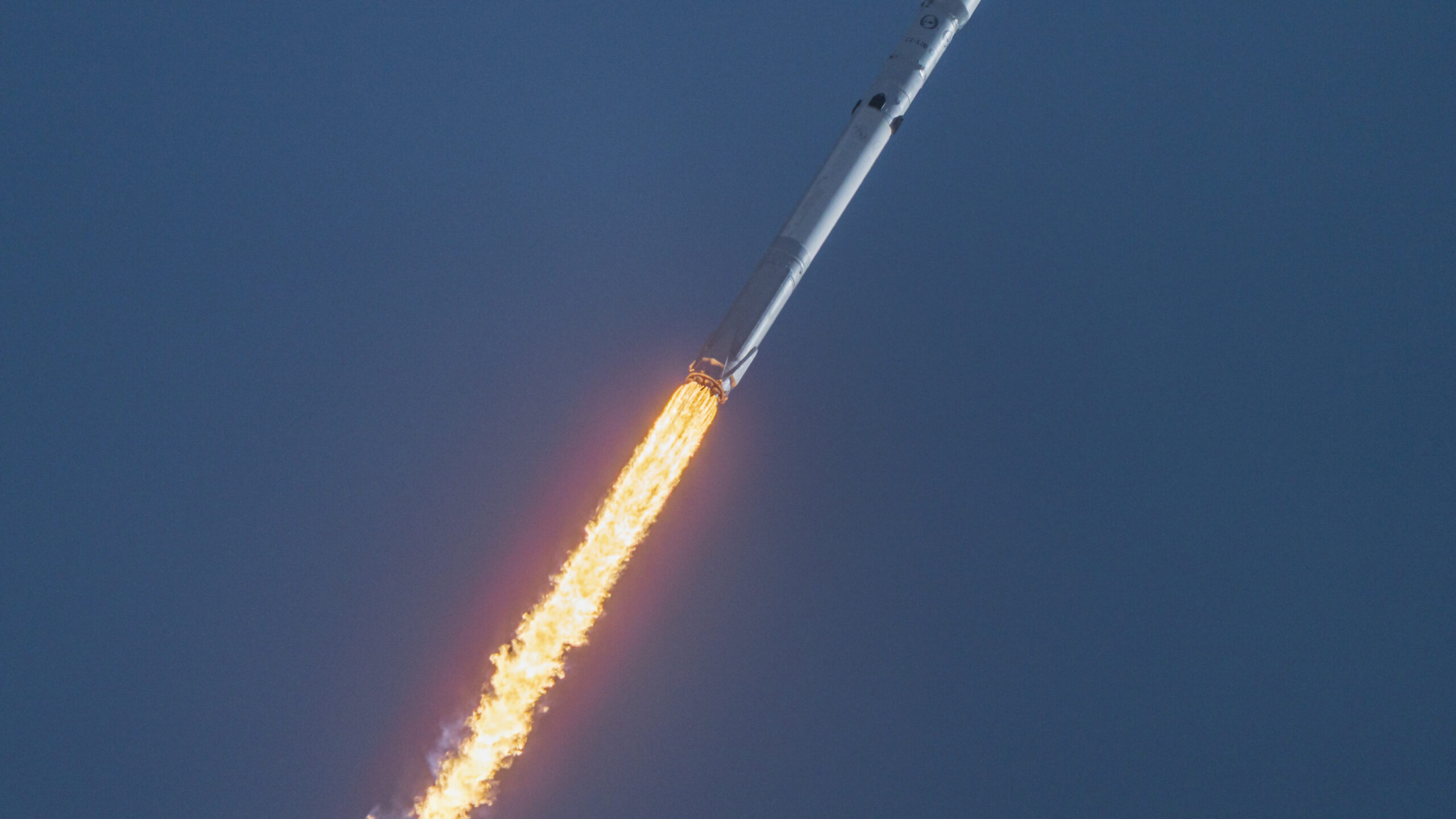
On Monday, June 1, 2026, China surprised the world with the launch of the Long March 12B, a next-generation rocket designed for orbital reusability. Developed by the China Aerospace Science and Technology Corporation (CASC), this vehicle represents a leap in the country's ability to compete in the rocket reuse race. Unlike traditional expendable rockets, the Long March 12B is designed to land its first stage, similar to SpaceX's Falcon 9, which achieved its first successful landing in 2015. However, the context is different: while SpaceX took nearly a decade to be matched by another company (Blue Origin in 2025), China could have multiple orbital landings this very year.

The key technical advancement behind this is the reuse of the first stage, which drastically reduces launch costs. The Long March 12B uses YF-100K engines, upgraded versions of the kerosene-liquid oxygen engines already flown on other Chinese rockets. Reusability not only involves landing but also relaunching the same stage, something SpaceX first achieved in 2017. China, with its mix of private companies (like LandSpace and Galactic Energy) and state backing, could accelerate this process. Recent research indicates that reusability can reduce launch costs by up to 80%, democratizing access to space and enabling more microgravity experiments critical for understanding diseases like osteoporosis and sarcopenia.
“The Long March 12B could land its first stage in 2026, a milestone China aims to achieve before any other nation.”
Key Findings
- First Launch: The Long March 12B lifted off on June 1, 2026, from the Jiuquan Satellite Launch Center, marking the debut of a Chinese rocket designed for reusability. This launch placed an experimental communications satellite into orbit, demonstrating the vehicle's payload capacity.
- Domestic Competition: Several Chinese companies, including LandSpace and Galactic Energy, are also competing to be the first to land a reusable orbital rocket in China. LandSpace plans a landing of the Zhuque-3 by late 2026, while Galactic Energy is developing the Pallas-1 with a modular design allowing partial reusability.
- State Advantage: CASC, the state-owned enterprise, has nearly unlimited resources, giving it an edge over private startups, though the latter have more flexibility. CASC has invested over 10 billion yuan in the Long March 12B program, according to official sources.
- Global Comparison: SpaceX landed its first orbital rocket in 2015, followed by Blue Origin in 2025; China could achieve the same in 2026, closing the gap in just 11 years. Additionally, NASA has postponed its own reusable demonstrator until 2027, giving China a window of opportunity.

Why It Matters
Rocket reusability is not just an engineering feat; it has profound implications for space exploration, economics, and national security. For health and wellness enthusiasts, this may seem distant, but space technology often trickles down to terrestrial innovations. For example, life support systems for long-duration missions have led to advances in water filtration and air purification. Moreover, reduced launch costs could accelerate microgravity research, which is already yielding insights into cellular aging, bone loss, and drug development. A 2025 study in *Nature* showed that microgravity induces epigenetic changes in immune cells, potentially aiding the development of therapies for autoimmune diseases.
The competition between China and the US also drives investment in R&D, which could benefit science overall. If China achieves an orbital landing this year, it will demonstrate that its innovation model, combining state and private enterprises, is effective. This could lead to a new era of international cooperation or competition in space exploration. Additionally, lower costs will allow more countries and private companies to access space, fostering a global space economy that could reach $1.4 trillion by 2030, according to Morgan Stanley estimates.
Your Protocol

While you can't launch a rocket, you can apply principles of reusability and efficiency to your life. Here are practical steps inspired by space technology:
- 1Optimize Your Energy: Just as a reusable rocket saves fuel by landing, you can save mental energy by establishing routines. Spend 10 minutes each morning planning your day, prioritizing high-impact tasks. Use the Pomodoro Technique (25 minutes work, 5 minutes break) to maintain focus and avoid burnout.
- 2Recycle Your Time: Identify activities you can "reuse," such as reading an article and sharing key points on social media, or exercising while listening to an educational podcast. For example, combine a 30-minute walk with an episode of a space science podcast to learn while getting fit.
- 3Invest in Systems: CASC invests in infrastructure; you can invest in sustainable habits: a balanced diet, regular exercise, and quality sleep. Don't seek quick fixes, but systems that work long-term. Set a fixed sleep and wake schedule, and use an activity tracker to monitor your progress.
What To Watch Next
The coming months will be crucial for China's space race. LandSpace is expected to attempt an orbital landing with its Zhuque-3 rocket by late 2026, while CASC may conduct multiple test flights of the Long March 12B. Additionally, private company Galactic Energy is developing the Pallas-1 rocket, also reusable. If any of these missions succeed, China will become the second country to achieve a reusable orbital landing, after the US. Rumors also suggest that the European Space Agency (ESA) is considering collaboration with China on reusable technologies, which could shift the geopolitical landscape.
Globally, NASA and ESA are also advancing reusable technologies, but China's pace could surprise. For health enthusiasts, it's worth tracking how microgravity affects the human body, as data from these missions could inform future treatments for osteoporosis and muscle atrophy. NASA plans to launch the "Tissue Chips in Space" experiment in 2027, studying organs in microgravity, but Chinese data may arrive sooner.
The Bottom Line
The Long March 12B is more than a rocket; it's a symbol of how accelerated innovation can close technological gaps. For the average biohacker, the lesson is clear: reusability and efficiency are keys to progress, whether in space or personal health. Maintain a focus on sustainable systems and prepare to adapt quickly to changes. The future, both in space and on Earth, belongs to those who can constantly iterate and improve. China's space race not only takes us to the stars but also teaches us to optimize our own resources.
:format(jpg):quality(99):watermark(f.elconfidencial.com/file/a73/f85/d17/a73f85d17f0b2300eddff0d114d4ab10.png,0,275,1)/f.elconfidencial.com/original/4cf/2e0/bfd/4cf2e0bfd08a29dc1826f1fb958e281c.jpg)
:format(jpg):quality(99):watermark(f.elconfidencial.com/file/a73/f85/d17/a73f85d17f0b2300eddff0d114d4ab10.png,0,275,1)/f.elconfidencial.com/original/11f/643/7be/11f6437becda8dad73a24cf063baf5c0.jpg)
