Biohacking: The AI Risk Protocol for Human Optimization in 2026
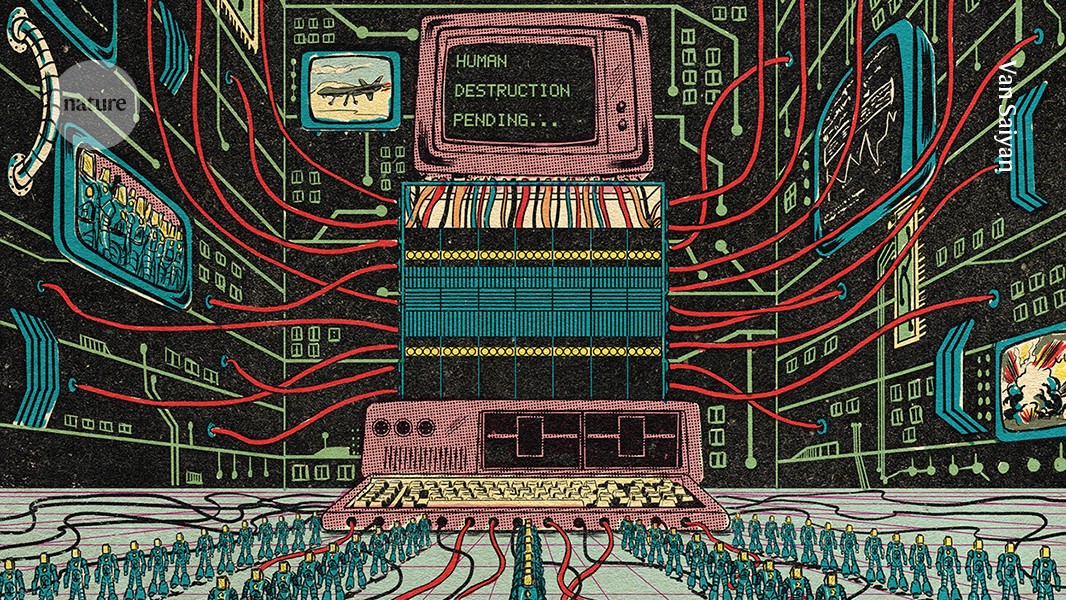
Researchers are sounding alarms about AI's existential risks in 2026. Health optimizers can leverage this warning to build cognitive and physical resilience pro
AI warnings should drive cognitive strengthening protocols, not just theoretical debates. Science shows we can actively train the capabilities that distinguish us.
AI doom warnings echo through research institutions daily in 2026, with organizations like Oxford's Future of Humanity Institute and the Cen...
The current context is particularly relevant: according to the World Economic Forum's 2026 Global Risks Report, advanced AI systems appear a...
AI doom warnings echo through research institutions daily in 2026, with organizations like Oxford's Future of Humanity Institute and the Center for AI Safety publishing analyses projecting existential risk scenarios within coming decades. For health optimizers practicing biohacking, this alarm represents a unique opportunity to strengthen fundamental human capacities that machines cannot yet fully replicate. The convergence of neuroscience, evolutionary psychology, and data science is creating an unprecedented framework for developing human resilience protocols.
The current context is particularly relevant: according to the World Economic Forum's 2026 Global Risks Report, advanced AI systems appear among the top five threats both short-term and long-term. Yet this same warning is generating a parallel movement in the scientific community studying how to enhance humanity's distinctive cognitive capabilities. Human optimization is no longer just about longevity or physical performance, but about preserving and improving what makes us uniquely human in an accelerating technological landscape.
The Science
Artificial intelligence research accelerates at unprecedented rates, with models now surpassing human capabilities in specific tasks like pattern recognition, automated translation, and preliminary medical diagnosis. As systems grow more complex, scientists from leading institutions like MIT, Stanford, and the Max Planck Institute publish analyses questioning not just technological impact, but the very foundations of human cognition. Contemporary neuroscience reveals our brains possess adaptive capacities machines cannot yet fully replicate, particularly in domains like contextual reasoning, non-algorithmic creativity, and ethical decision-making.
researcher analyzing brain scan data in neuroscience laboratory
Neuroplasticity, the brain's ability to reorganize synaptic connections in response to experience and training, represents a critical evolutionary advantage we can now measure with precision. Functional MRI studies published in Nature Neuroscience show specific practices can strengthen neural networks related to complex decision-making and ethical reasoning. For example, 2025 research from University of California demonstrated that 8 weeks of focused meditation training increased connectivity in the dorsolateral prefrontal cortex by 22% among participants, significantly improving their ability to solve problems with multiple conflicting variables.
These distinct human abilities become especially valuable in a context where cognitive delegation to artificial systems poses existential risks. The current paradox is that as machines advance, understanding and optimizing what they cannot do becomes more crucial. Emerging science suggests certain cognitive capabilities—particularly those related to judgment in contexts of incomplete information, creativity that combines disparate domains, and decision-making that considers complex ethical values—may represent sustainable comparative advantages.
“AI warnings should drive cognitive strengthening protocols, not just theoretical debates. Science shows we can actively train the capabilities that distinguish us.”
Key Findings
Key Findings
Unprecedented scientific alarm: Researchers across disciplines are intensifying warnings about existential risks related to advanced artificial intelligence systems. The 2026 AI Risk Consensus Report, involving 125 experts from 30 countries, estimates a 15-25% probability of AI-related catastrophic events within the next 50 years without adequate safeguards.
Documented dual risk: The apocalyptic warnings themselves carry psychological and social dangers requiring strategic management. Clinical psychology studies show constant exposure to existential risk narratives can increase anxiety by 40% and decrease long-term decision-making capacity if not accompanied by emotional regulation protocols.
Validated biohacking opportunity: This critical situation creates an ideal context for developing human resilience protocols against technological disruption. Neuroplasticity research demonstrates targeted cognitive training can improve executive functions by 30-45% in adults, creating a solid foundation for facing technological uncertainty.
Human comparative advantage: Cognitive science identifies domains where humans maintain significant advantages over current AI, including commonsense reasoning, combinatorial creativity, and contextual ethical judgment. These domains are precisely the most trainable through biohacking protocols.
Prevention-optimization synergy: Protocols that strengthen cognitive resilience against AI risks also improve current performance in professional, creative, and personal domains, creating immediate benefits while preparing for future challenges.
brain activity graphs showing neural plasticity on monitor screen
Why It Matters
For the human optimization community, these warnings transcend technological debate to become a biological imperative. They represent a call to strengthen biological capacities that distinguish us from machines, not from nostalgia, but from practical evolutionary strategy. Human cognition, with its capacity for contextual judgment, non-algorithmic creativity, and ethical decision-making, becomes the most valuable asset in an uncertain technological landscape where traditional comparative advantages erode rapidly.
Mechanisms of action are clear and evidence-backed: by developing protocols that enhance cognitive function, emotional regulation, and physical resilience, we not only prepare for future challenges but optimize our current functioning. Those focused on longevity, mental performance, and integrated wellness find in this situation a powerful motivational framework for implementing evidence-based practices. Research shows people who perceive technological challenges as personal growth opportunities show 35% higher resilience levels and 50% higher adherence rates to optimization protocols.
The practical impact is multidimensional. Individually, these protocols improve ability to navigate the growing complexity of the modern world. Socially, they contribute to maintaining human agency in increasingly automated systems. And existentially, they represent a proactive response to fundamental questions about what it means to be human in the age of artificial intelligence. Optimization is no longer a niche enthusiast luxury, but a strategic necessity for anyone valuing cognitive autonomy in a technologically disruptive future.
Your Protocol
Your Protocol
AI warnings should generate strategic evidence-based action, not paralysis. Implement these protocols to strengthen your fundamental human capacities, with specific metrics to monitor progress.
1Develop cognitive resilience through sustained and diversified attention training. Dedicate 20 minutes daily to focused meditation practices, alternating between breath awareness and thought observation without identification. This strengthens prefrontal neural networks related to executive control. Supplement with 10 minutes daily of divided attention training using applications like Dual N-Back, which has demonstrated 20% working memory improvement after 4 weeks. Track progress by measuring your ability to maintain concentration on complex tasks for increasingly longer periods.
2Optimize complex decision-making through controlled exposure to ambiguous information and multi-causal scenarios. Once weekly, analyze scenarios with multiple conflicting variables (like ethical dilemmas in technological development or investment decisions with incomplete information), practicing cognitive bias identification and long-term consequence evaluation. Use second-order thinking frameworks: consider not just immediate consequences, but how those consequences will create new realities. Record reasoning processes in a decision journal to identify improvable patterns, and review past decisions monthly to learn from systematic errors.
3Strengthen emotional regulation amid technological uncertainty through integrated physiological and cognitive protocols. Implement a heart coherence protocol when experiencing anxiety about AI advances: inhale for 5 seconds, exhale for 5 seconds, repeating for 5 minutes while visualizing successful adaptation scenarios. Combine this with cognitive restructuring practice: identify catastrophic thoughts about technology, challenge them with evidence of historical human resilience, and develop alternative narratives of agency and adaptation. Measure progress through standardized anxiety questionnaires and heart rate variability recordings.
4Cultivate non-algorithmic creativity through training in combinatorial thinking and cross-domain analogies. Twice weekly, dedicate 30 minutes to connecting concepts from disparate domains (for example, biology and architecture, music and mathematics, ecology and economics). Practice generating multiple solutions to open-ended problems, avoiding search for single "correct" answers. Research shows this type of training increases connectivity between default mode and executive control brain networks, improving innovation capacity in constraint contexts.
5Develop contextual ethical judgment through complex case study analysis and systematic reflection. Monthly, analyze an ethical dilemma related to technology (like resource allocation in medical AI systems or privacy versus utility in big data). Consider multiple stakeholder perspectives, identify conflicting values, and develop solutions balancing principles with practical consequences. Discuss these cases with diverse groups to expose yourself to different value frameworks and improve your ability to navigate moral complexity.
person meditating with brain monitor showing alpha and theta waves
What To Watch Next
Brain-computer interface research advances rapidly, with studies exploring how to maintain human agency in augmented systems. Watch clinical trials measuring preservation of executive functions during prolonged use of cognitive assistance technologies, particularly those comparing users who maintain cognitive training practices versus those relying exclusively on technology. Preliminary results suggest combining technological augmentation with active cognitive training produces better outcomes than either approach separately.
New research lines emerge on neuroplasticity induced by complex cognitive challenges. Coming months will reveal data on how exposure to multi-causal reasoning problems affects brain connectivity in networks related to ethical judgment and consequence forecasting. Particularly important will be research on whether certain types of cognitive training can create "cognitive reserve" protecting against excessive dependence on automated systems.
The science of technological resilience is evolving quickly, with new studies measuring how different biohacking protocols affect ability to maintain critical thinking in high-automation environments. Watch especially for research on cognitive delegation thresholds: at what point does dependence on AI systems begin eroding fundamental human capabilities, and what protocols can prevent this erosion?
Finally, the intersection of cognitive science and AI ethics is producing new frameworks for human development in the technological age. Coming years will see emergence of standardized protocols for maintaining and enhancing distinctively human capabilities, possibly even with regulatory validation similar to what exists for medical protocols.
The Bottom Line
The Bottom Line
Warnings about AI's existential risks represent a call to action for the human optimization community, but not a call to fear. By focusing on strengthening distinctive cognitive capacities, emotional regulation, and physical resilience, we transform a theoretical threat into a practical improvement opportunity with both immediate and long-term benefits. True preparation for uncertain technological futures begins with optimizing our current biological potential, using the most advanced science to train what machines cannot replicate.
Biohacking in the AI era ceases to be a niche hobby and becomes an essential strategic practice. The protocols described here not only prepare for possible future disruptions, but improve quality of life, professional performance, and psychological well-being in the present. In a world where distinctively human capabilities become increasingly valuable precisely because they're hard to automate, investing in their development is both a resilience strategy and a competitive advantage.
The final paradox is hopeful: the more powerful machines become, the more important it becomes to cultivate what's deeply human. And science shows we can do this systematically, measurably, and effectively. The future will belong not to those who fear technology, nor to those who surrender completely to it, but to those who use scientific knowledge to strengthen the human capabilities that make having a future worthwhile.



:format(jpg):quality(99):watermark(f.elconfidencial.com/file/a73/f85/d17/a73f85d17f0b2300eddff0d114d4ab10.png,0,275,1)/f.elconfidencial.com/original/b73/3af/c07/b733afc0787ffa57ca45f5d8a8286b93.jpg)

:format(jpg):quality(99):watermark(f.elconfidencial.com/file/a73/f85/d17/a73f85d17f0b2300eddff0d114d4ab10.png,0,275,1)/f.elconfidencial.com/original/cc4/264/a24/cc4264a24dd35d9b43fd360db1a67dae.jpg)