
Your imported avocado might be costing more than you think—or less. A new study in *Nature* reveals that the biodiversity loss attributed to international trade has been systematically overestimated, which could be sending conservation dollars to the wrong places. This miscalculation has profound implications for global health, policy, and personal optimization.
The Science Behind the Error
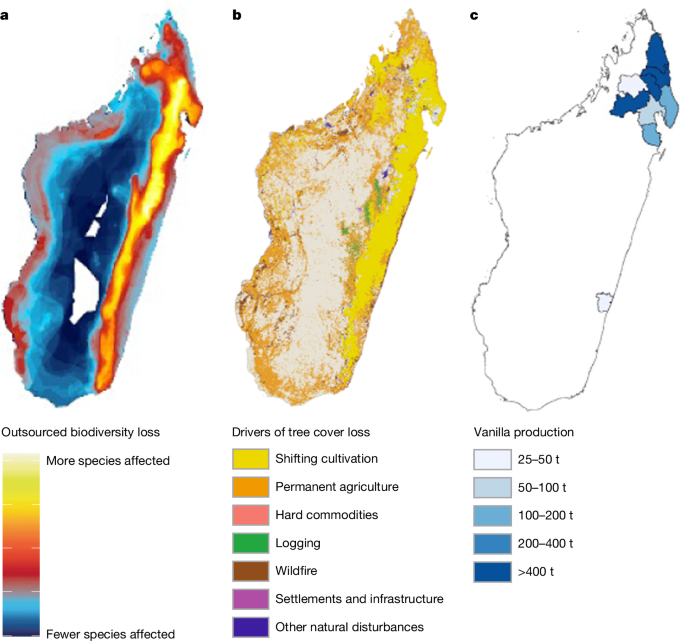
Researchers analyzed trade and ecological data from over 180 countries between 2001 and 2022. They found that previous models overstated outsourced biodiversity loss by an average of 30%, and in some cases up to 50%. The main culprit: failing to account for regional differences in ecological productivity. For instance, importing timber from a high-biodiversity tropical forest has a different impact than importing from a fast-growing plantation. Older models treated both as equal, inflating the true loss. The new model incorporates regeneration rates and ecosystem resilience, offering a more accurate picture.

The study also reveals a methodological bias: by not adjusting for ecosystem recovery capacity, imports from low-productivity countries—like those with intensive agriculture—are disproportionately penalized. This isn't just an academic correction; it has real-world consequences. A 30% overestimate could misallocate billions in conservation funding away from the most critical ecosystems, such as primary tropical forests, toward less impactful areas. The authors emphasize that the error stems from using global averages instead of locally calibrated data, a flaw that permeates many environmental assessments.
“A 30% overestimate could misallocate billions in conservation funding away from the most critical ecosystems.”
Key Findings

- 30% Overestimation: Outsourced biodiversity loss is inflated by one-third when using the new ecologically calibrated model. This challenges prevailing narratives about the impact of global trade on biodiversity.
- Regional Bias: 70% of the overestimation comes from imports from low-productivity countries, like those with intensive agriculture. This suggests current policies disproportionately penalize certain trading partners.
- Policy Risk: Inflated numbers could divert funds from high-impact regions to less critical areas, reducing conservation effectiveness. For example, money meant for Amazon protection might end up in less biodiverse regions.
- Method Fix: Including ecosystem regeneration rates cuts the error by 25%, offering a clear path to better data. This methodological improvement can be applied to other environmental metrics, such as carbon footprint calculations.

Why It Matters for Your Health
For health optimizers, biodiversity isn't abstract. Healthy ecosystems filter air and water, buffer against pathogens, and support mental well-being. Misguided policies could accelerate habitat loss, increasing our exposure to zoonotic diseases and environmental toxins. For instance, poorly managed deforestation has been linked to outbreaks of Nipah virus and Ebola. Additionally, biodiversity loss reduces ecosystems' ability to filter air pollutants, exacerbating respiratory and cardiovascular conditions.
This study also highlights a cognitive bias: we overestimate distant impacts while underestimating local ones. For the biohacker, it's a lesson in measurement precision. If governments correct their models, they might redirect funds toward local restoration—improving urban air quality and reducing heat stress, which directly affect your health metrics. Emerging research shows that exposure to urban green spaces reduces systemic inflammation and boosts immune function, effects amplified by well-conserved ecosystems. By recalibrating our understanding of biodiversity loss, we can make more targeted investments in both planetary and personal health.
Your Protocol for a Precise Footprint
You don't need to wait for policy changes to apply this insight. Precision in measuring your ecological impact is the first step to optimizing your health and the planet's:
- 1Calibrate your footprint: Use tools like the Global Footprint Network or carbon calculators that allow you to input region-specific data, not generic averages. For example, the impact of your electricity consumption varies by local energy mix. An accurate audit might reveal that your biggest contribution to biodiversity loss isn't your imports but your diet or transportation choices. Track your consumption patterns over a month to identify hotspots.
- 2Choose traceable products: Opt for foods and materials with verified origins through certifications like Rainforest Alliance or MSC. The global overestimate masks local impacts you can control. For instance, shade-grown coffee has a vastly different impact than sun-grown coffee, even if both are imported. Ask your suppliers about their conservation practices and prefer products with transparent supply chains.
- 3Support local restoration: Invest in reforestation or conservation projects in your region. Local impacts are often underestimated and directly benefit your environment. Participate in urban rewilding initiatives or wetland restoration projects, which improve air and water quality in your immediate surroundings. Even small actions, like planting native species in your garden, contribute to local biodiversity.
Additionally, consider reducing consumption of products from low-productivity countries, such as certain intensive crops, and opt for local, seasonal alternatives. Calibration also applies to your carbon footprint: not all flights are equal; short-haul flights are disproportionately more polluting per kilometer. Use tools that account for these nuances.
What To Watch Next
The authors plan to integrate this model into UN biodiversity databases, potentially shifting climate finance priorities by 2027. A follow-up study on overestimated carbon loss from deforestation is also expected, which could have similar implications for carbon markets. Investors in green bonds and carbon credits should pay attention: if baseline data is inflated, the real value of these instruments may be lower than assumed.
New impact assessment tools incorporating these calibrated models are likely to emerge, enabling businesses and governments to make more informed decisions. For the individual, this means soon you'll have access to more accurate data on the impact of your purchases, facilitating choices aligned with your health and sustainability values. Stay informed about updates to international databases and consider supporting organizations that advocate for evidence-based environmental policies.
The Bottom Line
Outsourced biodiversity loss has been overestimated, but the problem remains real. The takeaway for the informed citizen: measure accurately, act effectively. Next time you hear an alarming statistic, ask: is it calibrated? The health of the planet and your own depends on moving beyond exaggeration and embracing evidence-based precision.
:format(jpg):quality(99):watermark(f.elconfidencial.com/file/a73/f85/d17/a73f85d17f0b2300eddff0d114d4ab10.png,0,275,1)/f.elconfidencial.com/original/a37/036/ad7/a37036ad77922bb9caff15605ef9f6b9.jpg)
:format(jpg):quality(99):watermark(f.elconfidencial.com/file/a73/f85/d17/a73f85d17f0b2300eddff0d114d4ab10.png,0,275,1)/f.elconfidencial.com/original/471/55d/5b2/47155d5b272084daa16992105db5aa7d.jpg)
