
The Breakthrough
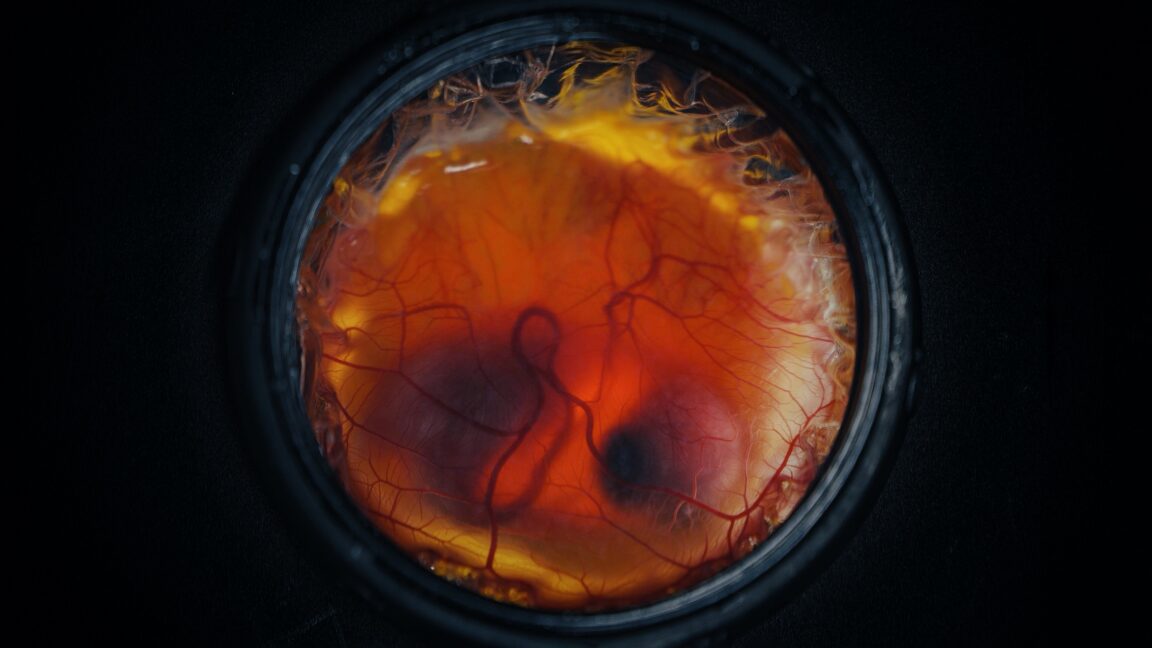
Biotech startup Colossal announced an artificial eggshell that allows chick embryos to develop entirely outside the natural shell. Within two days of laying, the company transferred egg contents to their custom container and raised normal, walking chicks.
The Science

For decades, developmental biologists have used chicken embryos to study vertebrate development because they grow outside the mother. Researchers would chip a hole in the shell, manipulate the embryo, and seal it with tape—a finicky process with limited access. Colossal's innovation replaces the shell with a transparent, controlled vessel, enabling real-time observation and manipulation without interference.

The company reports that chicks hatched from the artificial shell were normal and viable. While the study hasn't been peer-reviewed, it represents a significant leap in embryo culture technology. The key is timing: contents must be transferred within 1-2 days of laying, a critical window for early development.
“Colossal's artificial egg enables normal chick development outside the shell, opening new avenues for research and potentially de-extinction.”
Key Findings
- Early transfer window: Egg contents moved to the artificial vessel within 1-2 days of laying, crucial for viability.
- Normal viability: Hatched chicks were normal and could walk, indicating the synthetic environment didn't impair development.
- Unprecedented access: Transparent design allows continuous observation and manipulation, impossible with natural shells.
- De-extinction potential: For Colossal, this is a step toward breeding extinct species like the dodo or woolly mammoth, though hurdles remain.

Why It Matters
For biohackers and health optimizers, this innovation extends beyond de-extinction. Controlled embryo culture could accelerate research into genetics, development, and disease. It might enable precise study of birth defects or drug testing on developing organisms. In agriculture, artificial eggs could reduce reliance on laying hens, improving animal welfare and efficiency.
However, Colossal still faces challenges: transfer timing is narrow, survival rates aren't perfect, and genetic modification is needed to reintroduce extinct traits. The company's ultimate goal—resurrecting species—requires solving these issues.
Your Protocol
While not yet available to the public, you can prepare for future trends in reproductive biohacking and genetic engineering.
- 1Follow the science: Track Colossal's publications and peer reviews. Data transparency will be key to evaluating safety and efficacy.
- 2Explore gene editing: CRISPR is central to these advances. Consider courses in bioinformatics or basic genetics to understand the tools.
- 3Assess ethical implications: The ability to create artificial life raises questions about animal welfare and biodiversity. Engage in discussions to stay informed.
What To Watch Next
Colossal plans to use this technology for its dodo de-extinction project, aiming for reintroduction in the coming years. It's also modifying elephant cells to create a woolly mammoth hybrid. The company must demonstrate that artificial embryos can reach adulthood and reproduce.
Academic publication is expected, allowing replication and improvement. Regulatory bodies like the FDA haven't issued guidelines yet, so the legal landscape remains uncertain.
The Bottom Line
Colossal's artificial egg is a fascinating step toward a new era of biotechnology, where life can be created and observed with unprecedented control. For health optimizers, it's a reminder that science moves fast: what's lab-bound today could become a tool for understanding development and genetics tomorrow. Stay informed and ready for the implications.
Expanded Context and Future Applications
Chicken embryos have been a cornerstone of developmental biology, but the natural shell imposes severe limitations. Colossal's system not only provides full optical access but can also integrate sensors to measure oxygen, pH, and nutrients in real time. This could revolutionize our understanding of how environmental factors influence early development.
Moreover, the technique could be applied to other birds, including endangered species. For example, condor or eagle eggs are extremely fragile and difficult to incubate in captivity; an artificial shell could boost survival rates. Colossal has already expressed interest in collaborating with zoos and conservation centers.
In regenerative medicine, chicken embryos are used as models for organ formation. With the new system, scientists could induce specific defects and observe development, aiding in designing therapies for human malformations. It could also be used to test chemical toxicity in a developing organism without needing mammals.
Critical Perspectives
Despite the excitement, some experts note that the early transfer window (1-2 days) remains a logistical challenge. In nature, the embryo attaches to the shell membrane and receives nutrients via the yolk sac; replicating that environment artificially requires precise control of temperature, humidity, and gas composition. Colossal has not disclosed success rates, but they are likely still low.
Another point is the ethics of de-extinction. While the technology could aid conservation, it raises questions about whether it's right to bring back animals that no longer have natural habitats. Moreover, resources invested in de-extinction could be used to protect living species. These debates will continue as the technology matures.
Practical Protocol for the Reader
If you want to engage with this emerging field, here are concrete steps:
- 1Continuous education: Enroll in online courses on developmental biology or genetics. Platforms like Coursera or edX offer free programs.
- 2Citizen participation: Follow organizations like the Society for Developmental Biology and attend webinars on new techniques.
- 3Informed investment: If interested financially, research biotech startups working on embryo culture or gene editing. Colossal is private, but there are biotech investment funds.
- 4Ethical dialogue: Join forums like Bioethics.net or the Hastings Center to discuss moral implications of these technologies.
What's Next
In the coming months, Colossal is expected to publish more detailed data in a peer-reviewed journal. They also plan to expand the technique to other species, like the dodo, whose genome they have already sequenced. Meanwhile, academic teams are developing similar systems for mammalian embryos, which could have applications in human assisted reproduction.
The regulatory landscape is uncertain. The FDA has not yet classified these devices, but they will likely require approval as medical or biological devices. In Europe, the European Medicines Agency may have jurisdiction. Biohackers should stay aware of local regulations if they wish to experiment.
The Bottom Line
Colossal's artificial egg is a fascinating step toward a new era of biotechnology, where life can be created and observed with unprecedented control. For health optimizers, it's a reminder that science moves fast: what's lab-bound today could become a tool for understanding development and genetics tomorrow. Stay informed and ready for the implications.
:format(jpg):quality(99):watermark(f.elconfidencial.com/file/a73/f85/d17/a73f85d17f0b2300eddff0d114d4ab10.png,0,275,1)/f.elconfidencial.com/original/74d/0df/4ec/74d0df4ec02cc49a09b24ff79766878d.jpg)
:format(jpg):quality(99):watermark(f.elconfidencial.com/file/a73/f85/d17/a73f85d17f0b2300eddff0d114d4ab10.png,0,275,1)/f.elconfidencial.com/original/aa0/b3c/6c1/aa0b3c6c10bc4830f1a7f98028bbc49f.jpg)
