Arrestin Breakthrough: Unlocking GPCR Function with Condensates | StackedHealth
Biohacking
Arrestin Breakthrough: Unlocking GPCR Function with Condensates
A Nature study reveals β-arrestins form phase-separated condensates, diversifying GPCR signaling. Implications for drug design and biohacking optimization.
β-arrestin condensates are the new organizers of cellular communication: phase separation turns a simple regulator into a multifunctional hub.
Your cells just got a new communication upgrade. A study published in *Nature* on May 27, 2026, reveals that β-arrestins—proteins that regul...
GPCRs are the cell's antennae, detecting hormones, neurotransmitters, and light. When activated, they trigger internal signals. β-arrestins ...
Your cells just got a new communication upgrade. A study published in *Nature* on May 27, 2026, reveals that β-arrestins—proteins that regulate G-protein-coupled receptors (GPCRs)—form liquid-like condensates, reshaping how we understand cellular signaling. This matters because GPCRs are targets for about one-third of all FDA-approved drugs, from blood pressure medications to antidepressants.
The Science
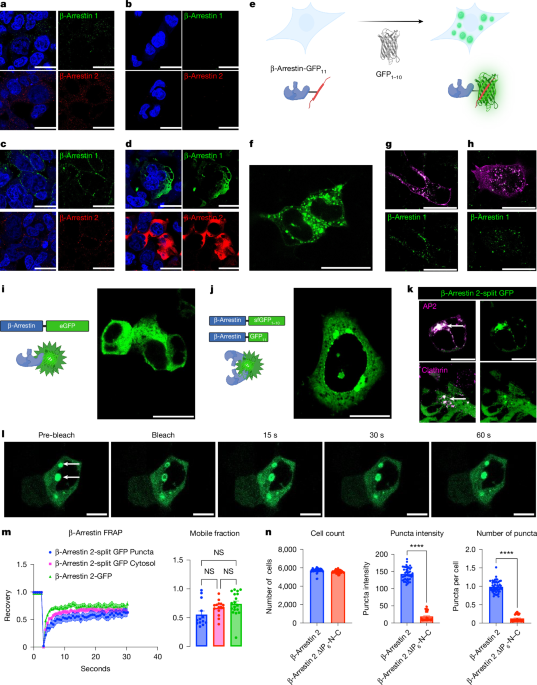
microscopic image of fluorescent condensates in cells
GPCRs are the cell's antennae, detecting hormones, neurotransmitters, and light. When activated, they trigger internal signals. β-arrestins then bind to the receptor, stopping the signal and often initiating alternative pathways. Until now, scientists thought β-arrestins worked as single molecules. The new study shows they can undergo liquid-liquid phase separation (LLPS), forming concentrated droplets that organize and diversify GPCR signaling.
Phase separation is like oil droplets forming in water—molecules cluster without a membrane. In this case, β-arrestin condensates recruit other proteins and modify the duration and intensity of signals. This suggests LLPS is a fundamental mechanism for GPCR versatility, potentially explaining how a single receptor can produce different effects depending on context.
“β-arrestin condensates are the new organizers of cellular communication: phase separation turns a simple regulator into a multifunctional hub.”
Key Findings
Key Findings
Functional condensates: β-arrestins form liquid-phase condensates that regulate GPCR function, as demonstrated in the *Nature* study.
Signal diversification: Phase separation organizes and diversifies GPCR signaling, enabling complex cellular responses.
Novel mechanism: This is the first demonstration of β-arrestins using LLPS, a process seen in stress granules and other protein aggregates.
Drug development implications: Approximately 34% of FDA-approved drugs target GPCRs; this discovery could guide more precise drug design.
diagram of GPCR signaling with condensates
Why It Matters
This discovery is a game-changer for anyone interested in health optimization. GPCRs control mood, metabolism, immune response, and more. Receptors for serotonin, dopamine, and adrenaline are all GPCRs. Understanding how β-arrestin condensates modulate signals could lead to targeted therapies with fewer side effects.
For biohackers, phase separation opens a new lever. Compounds that affect membrane fluidity or protein concentration might influence condensate formation. While early, this suggests that manipulating LLPS could be a tool to fine-tune cellular signaling without drugs.
Moreover, variability in condensate formation could explain why individuals respond differently to medications. Genetic or epigenetic factors affecting LLPS might influence treatment efficacy for depression, anxiety, or chronic pain.
Your Protocol
Your Protocol
While the science is nascent, you can apply general principles to support optimal signaling:
1Support membrane fluidity: Consume omega-3 fatty acids (EPA and DHA) from fatty fish or high-quality supplements. Membrane fluidity affects GPCR and β-arrestin interactions.
2Manage cellular stress: Phase separation is sensitive to stress. Practices like meditation, deep sleep, and cold exposure (e.g., cold plunges) reduce oxidative stress and support cellular homeostasis.
3Monitor medication response: If you take GPCR-targeting drugs (beta-blockers, antidepressants, antihistamines), pay attention to variability. Future precision medicine may use condensate formation to personalize dosing.
person taking omega-3 supplements
What To Watch Next
Researchers are now investigating whether other GPCR regulators, like GRKs, also form condensates. Expect studies identifying existing drugs that modulate β-arrestin LLPS, potentially accelerating clinical translation. Clinical trials may assess whether condensate variability predicts treatment response. Keep an eye on journals like *Nature* and *Cell*, and cell biology conferences discussing phase separation.
The Bottom Line
The Bottom Line
β-arrestins form liquid condensates that organize GPCR signaling, transforming our understanding of cell communication. Practical applications are years away, but you can start optimizing cellular health with omega-3s, stress management, and attention to drug responses. Phase separation is the next frontier in personalized biochemistry.
Expanded Context
To fully appreciate this discovery, it helps to understand the historical context of GPCR research. For decades, scientists have known that GPCRs are the gateway for a wide range of signals, but the exact mechanism by which a single protein like β-arrestin could mediate such diverse effects was a mystery. Phase separation provides an elegant explanation: by forming condensates, β-arrestin can concentrate different sets of effector proteins in local microenvironments, allowing the same receptor to activate distinct pathways depending on cellular context. This has profound implications for pharmacology, suggesting that drugs could be designed to stabilize or destabilize specific condensates rather than simply activating or blocking the receptor.
Moreover, phase separation is not unique to β-arrestins. Similar phenomena have been observed in proteins linked to neurodegenerative diseases like ALS and Alzheimer's, where abnormal protein aggregation forms toxic granules. However, in the case of β-arrestins, condensate formation appears to be a regulated, functional process, not a pathological one. This highlights the dual nature of phase separation: it can be both a beneficial cellular organization mechanism and a precursor to disease when dysregulated. Understanding this duality will be key to developing therapies that safely modulate LLPS.
Future Perspectives
Future Perspectives
The *Nature* study is just the beginning. Researchers are already using super-resolution microscopy and mass spectrometry to map the exact composition of β-arrestin condensates. In the coming years, hundreds of proteins that are selectively recruited to these condensates are expected to be identified, providing a detailed map of the signaling network. Additionally, tools are being developed to visualize condensate formation in real time in living cells, allowing scientists to study how factors like stress, nutrition, or drugs affect their dynamics.
Another promising avenue is the search for compounds that modulate β-arrestin LLPS. Libraries of approved drugs are already being screened for this purpose, and some initial candidates have shown activity in in vitro assays. If these compounds prove effective in animal models, they could pave the way for human clinical trials within 5 to 10 years. For biohackers, this means that interventions based on modulating phase separation might be closer than they seem.
Integration with Other Health Strategies
Optimizing cellular signaling does not happen in a vacuum. β-arrestin condensate formation can be influenced by factors such as chronic inflammation, hormonal imbalance, and diet quality. For example, a diet high in refined sugars and trans fats can increase cellular stress and alter membrane fluidity, potentially hindering proper condensate formation. Conversely, a plant-based diet rich in polyphenols and unsaturated fatty acids may favor a cellular environment conducive to functional LLPS.
Additionally, regular exercise and controlled cold exposure (such as cold showers or cryotherapy) have been shown to induce cellular stress responses that promote the formation of stress granules and other condensates. Although a direct connection to β-arrestins has not yet been established, it is plausible that these practices also influence the dynamics of signaling condensates. Therefore, a holistic approach combining nutrition, exercise, and stress management may be the best strategy to support optimal cell communication.
Ethical and Safety Considerations
Ethical and Safety Considerations
As with any scientific discovery, potential applications must be approached with caution. Manipulating phase separation could have unintended effects if not fully understood. For instance, forcing excessive condensate formation could lead to pathological aggregation, similar to what occurs in neurodegenerative diseases. Therefore, any intervention aimed at modulating LLPS must be rigorously tested in preclinical models before being applied to humans.
Furthermore, precision medicine based on condensate formation raises questions about equity and access. If genetic tests to assess condensate-forming capacity become common, disparities in access to personalized treatments could emerge. It is crucial that advances in this field are distributed equitably and that clear regulatory frameworks are established to ensure safety and efficacy.
Conclusion
The discovery that β-arrestins form phase-separated condensates represents a paradigm shift in our understanding of cellular signaling. This finding not only explains how a single regulator can mediate diverse effects but also opens new avenues for drug development and biohacking strategies. Although practical applications are still on the horizon, the fundamental principles can already be applied to optimize cellular health through diet, stress management, and monitoring medication responses. Phase separation is undoubtedly the next frontier in personalized biochemistry.