
A Backyard Stone Rewrites Ancient History
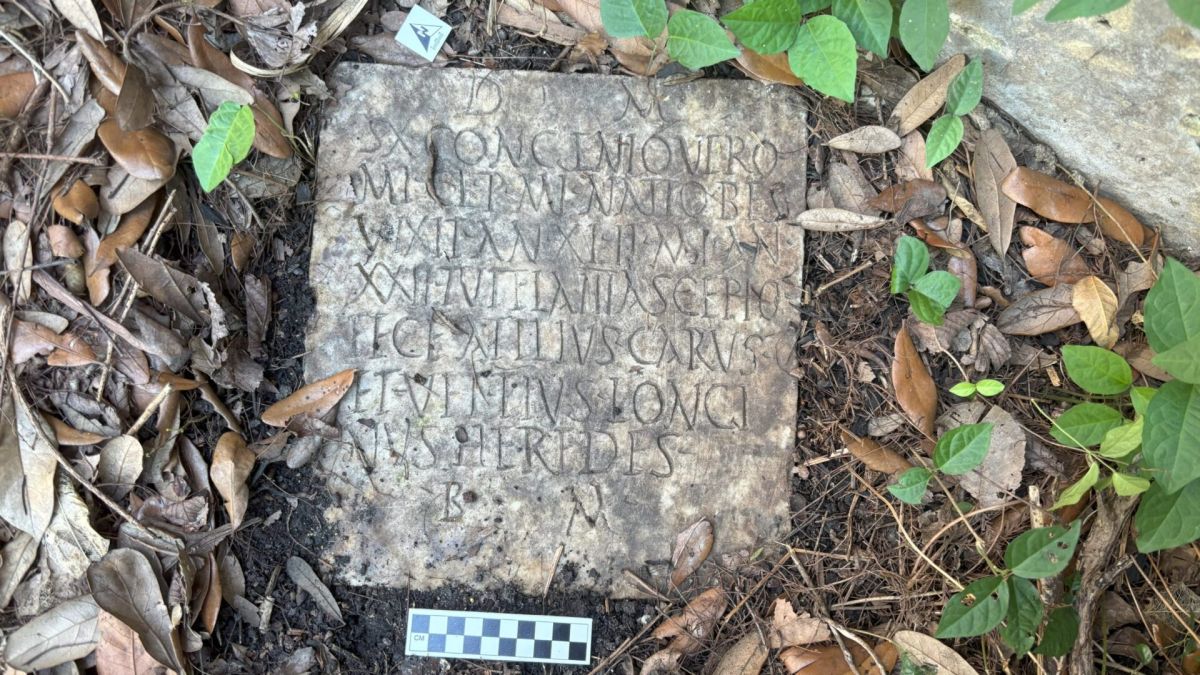
A stone used as a paperweight in an Ohio backyard turned out to be a 1,500-year-old carved slab from the Hopewell culture. This accidental discovery is reshaping our understanding of pre-Columbian societies in North America, revealing sophisticated spiritual practices and social organization.
The Hopewell culture, which flourished from 100 BCE to 500 CE in the Ohio River Valley, is known for its large earthworks and extensive trade networks that spanned from the Appalachians to the Rocky Mountains. However, fewer than 20 Hopewell engraved slabs have ever been found, and none in a domestic context. This slab, discovered by homeowners while gardening, provides archaeologists with a rare opportunity to study Hopewell rock art in its original setting.
The Science


The slab, measuring about 12 inches long and weighing 30 pounds, was analyzed by researchers at the University of Cincinnati. Using luminescence dating, they determined the sandstone had been buried for at least 1,500 years. The carvings—depicting a human-like figure with horns, a hawk, and spiral motifs—were made with stone tools, indicating a sophisticated artistic tradition.
Luminescence dating measures the last time quartz or feldspar grains were exposed to sunlight. When the slab was buried, the grains were shielded from light and began accumulating energy from environmental radiation. By measuring that energy, scientists can calculate how long the slab has been buried. The result was clear: the slab had been underground for at least 1,500 years, placing it firmly in the late Hopewell period.
“This 1,500-year-old sandstone slab is one of the few examples of Hopewell rock art ever found in an archaeological context, and the only one found in a domestic setting.”
Key Findings
- Confirmed Age: Luminescence dating placed the slab firmly in the Hopewell period (100 BCE – 500 CE), with a minimum age of 1,500 years. This is consistent with other Hopewell sites in the region.
- Complex Symbolism: The petroglyphs include an anthropomorphic figure with horns, a hawk, and a spiral motif, possibly representing a shamanic cosmos. The horned figure is similar to depictions at other Hopewell sites, such as Mound City, suggesting shared iconography.
- Local Origin: The sandstone is native to the region, specifically from the Berea Sandstone formation in Ohio. This indicates the slab was carved locally, not imported, supporting the idea that the discovery site may have been a ceremonial location.
- Ritual Function: Archaeologists believe the slab may have been part of an altar or ceremonial marker, given its size and the effort required to carve it. Wear on the edges suggests repeated handling, perhaps during periodic rituals.
- Unique Context: It is one of fewer than 20 known Hopewell engraved slabs, and the only one found in a domestic setting (a suburban garden). This raises questions about whether Hopewell rituals occurred in residential areas or if the site was originally ceremonial and later occupied.
Why It Matters
This discovery challenges traditional views of Hopewell society as primarily nomadic. The presence of a large, elaborately carved ceremonial slab suggests more permanent settlements and complex social organization. The horned figure, similar to depictions found at other Hopewell sites, points to a shared belief system across hundreds of miles, indicating extensive cultural and spiritual exchange networks.
Moreover, the fact that the stone lay unrecognized in a backyard for decades highlights the fragility of cultural heritage and the importance of public engagement in archaeology. The homeowners, who used it as a paperweight, had no idea of its historical value. This case is a reminder that archaeological treasures can be closer than we think, and that collaboration between the public and scientists is essential to preserve our shared past.
The discovery also has implications for understanding Hopewell cosmology. The combination of a horned human figure, a hawk, and a spiral suggests a visual narrative that may represent a shamanic journey between worlds. Shamans in many Native American cultures used horns or animal headdresses to symbolize their connection to the spirit world. The hawk, a power animal that flies high and sees far, is associated with vision and prophecy. The spiral, a recurring motif in Hopewell art, may represent the cycle of life, the soul's journey, or the expanding cosmos.
Your Protocol
If you encounter a suspicious artifact, follow these steps to preserve its scientific context:
- 1Do not move or clean it: The original position and attached residues can contain crucial information. Take photos from multiple angles and note the exact location. If possible, mark the spot with a non-intrusive object.
- 2Contact an expert: Reach out to a university archaeology department or your local heritage office. They can evaluate the find without damaging it. In the U.S., you can contact the National Park Service or your state historical society.
- 3Avoid social media: Publicizing the find can attract looters or curious individuals who might damage the site. Wait for professionals to document everything. If you must share, do so sparingly and without revealing the exact location.
- 4Document the context: Note the date, depth (if buried), and any nearby objects. This information is as valuable as the object itself. Draw a simple map of the area and take notes on the surrounding soil and vegetation.
- 5Respect the law: In many countries, archaeological finds belong to the state. Do not attempt to sell or keep the artifact; you could face legal penalties. In the U.S., the Archaeological Resources Protection Act (ARPA) of 1979 protects artifacts on federal land, and similar state laws apply on private property.
What To Watch Next
Researchers plan to conduct a detailed 3D scan of the slab to share with other specialists and search for similarities with other Hopewell petroglyphs. The site of the discovery is expected to be excavated for additional artifacts or structural remains. This case could spur citizen science projects in archaeology, where landowners collaborate with universities to identify and preserve hidden heritage.
Additionally, analysis of organic residues on the stone could reveal what types of offerings or pigments were used in rituals. Archaeologists also plan to use more precise dating techniques, such as radiocarbon dating of associated charcoal, to refine the site's chronology. In the long term, this find may lead to a revision of Hopewell history and greater recognition of their cultural complexity.
The Bottom Line
A common garden stone turned out to be a 1,500-year-old ceremonial slab from the Hopewell culture. The find underscores the importance of staying alert to our surroundings and collaborating with experts to preserve history. Who knows what other treasures lie beneath our feet, waiting to be rediscovered. Next time you find an unusual stone in your backyard, remember: it could be a window into the past.
:format(jpg):quality(99):watermark(f.elconfidencial.com/file/a73/f85/d17/a73f85d17f0b2300eddff0d114d4ab10.png,0,275,1)/f.elconfidencial.com/original/19a/0c6/1a1/19a0c61a1a5c1c4850bafab7a82f6748.jpg)
:format(jpg):quality(99):watermark(f.elconfidencial.com/file/a73/f85/d17/a73f85d17f0b2300eddff0d114d4ab10.png,0,275,1)/f.elconfidencial.com/original/8d4/d81/564/8d4d8156462a6c0f027c30699fb3ee3d.jpg)
