Ancient dice reveal Native Americans understood probability 12,000 years ago. This discovery reshapes our understanding of cognitive evolution, challenges historical narratives, and offers practical, evidence-based insights for modern mental optimization. The research led by Robert Madden at Colorado State University has uncovered artifacts dating back 12,000 years, demonstrating that Native American cultures developed probability systems millennia before any Old World civilization. This finding not only颠覆s Eurocentric historical narratives but reveals how structured play with random elements has been an evolutionary driver for developing complex cognitive abilities with direct relevance to contemporary mental health challenges.
The Science
For centuries, historians treated dice and probability theory as Old World innovations. The conventional narrative placed the birth of probabilistic thinking in Mesopotamian or Greek civilizations around 5,000 years ago, with archaeological records from sites like Ur and Crete providing what was considered definitive evidence. This Eurocentric perspective overlooked mounting evidence from American archaeological sites that told a different story entirely, perpetuating a narrow view of human cognitive development that privileged certain cultural trajectories over others. Twenty-first century archaeology, equipped with advanced dating techniques, computational analysis, and interdisciplinary collaboration, is fundamentally correcting this historical bias.
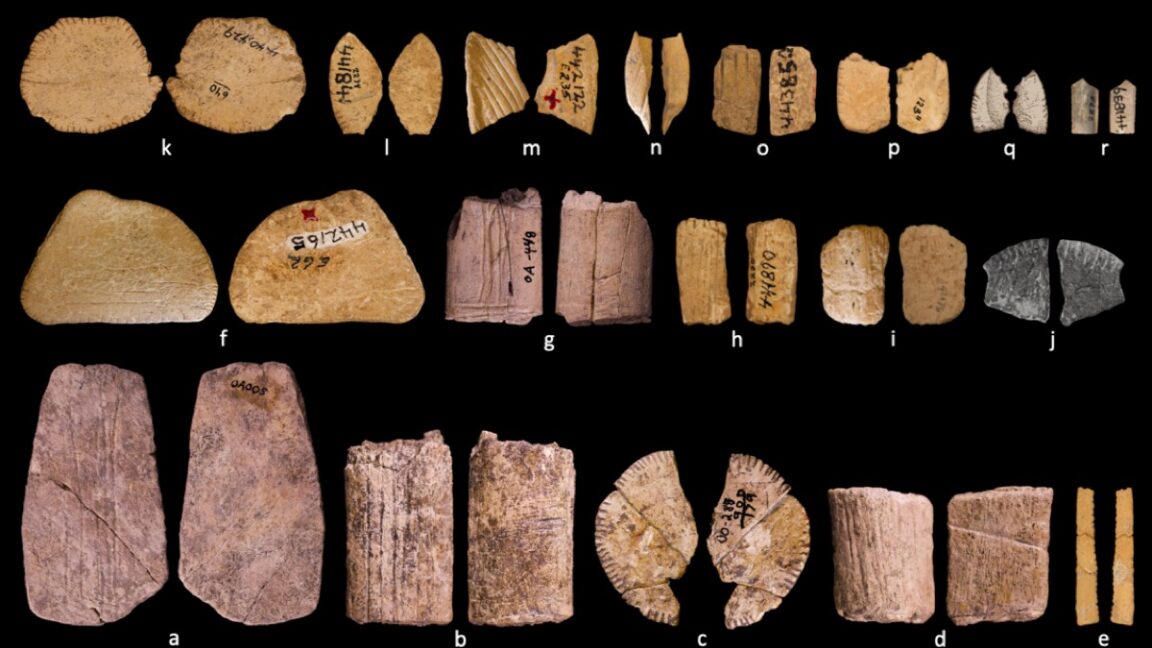
Robert Madden's research at Colorado State University has fundamentally challenged this paradigm through systematic re-examination of artifacts previously cataloged as "ritual objects" or "game pieces" in museum collections and archaeological sites. By applying microscopic analysis, wear pattern studies, and contextual archaeology, he identified consistent patterns in objects dating back more than 12,000 years—predating the earliest known Old World dice by approximately 7,000 years. These weren't mere decorations or utilitarian tools but deliberately crafted devices designed to produce random outcomes in structured contexts, representing a conceptual leap in human thought. Most significantly, these objects appear in virtually every Native American culture studied, from early Pleistocene populations to complex civilizations like the Maya and Ancestral Puebloans, spanning over 10,000 years of cultural continuity.
The artifacts Madden studied were rudimentary by modern standards—simple two-sided objects technically described as "binary lots" rather than the six-sided dice we recognize today. Yet their widespread distribution across the Americas, consistent design patterns, and archaeological contexts suggest they served specific cognitive, social, and possibly ritual functions that archaeologists had previously underestimated. Microscopic analysis reveals use-wear patterns consistent with repeated handling, while their distribution in archaeological contexts—often in domestic areas alongside other gaming implements—indicates integration into daily life rather than exclusive ceremonial use.
“Native American groups were deliberately making objects designed to produce random outcomes, and using those outcomes in structured games and decision-making processes, thousands of years earlier than previously recognized—a finding that rewrites the timeline of abstract thinking development.”
Key Findings
- Record antiquity: The oldest Native American dice date back 12,000 years, predating the earliest known Old World examples by millennia. This dating, confirmed through multiple methods including radiocarbon dating and optically stimulated luminescence, places the development of probabilistic thinking in America during the late Pleistocene, contemporary with megafauna extinctions and early human settlements across the continent.
- Binary design: These early dice were two-sided objects, creating simple binary outcomes (effectively 50/50 probabilities) rather than the more complex probability distributions of modern polyhedral dice. This simple yet effective design made randomness accessible and incorporable into games, rituals, and decision-making processes across different age groups and skill levels.
- Continental distribution: Similar artifacts appear in virtually every Native American tribe studied, from Arctic Inuit to Southern Mapuche, indicating a deeply rooted cultural practice that transcended linguistic and geographical boundaries. This distribution pattern suggests either widespread cultural diffusion through trade networks or independent emergence of similar concepts across different regions—both scenarios revealing something fundamental about human cognition.
- Structured use: Archaeological evidence shows these objects were used in games with defined rules, not merely as decorative or ritual items. Discovery contexts—often in specific activity areas within settlements—and wear patterns indicate repeated use in structured social activities that likely served multiple functions: cognitive training, social bonding, conflict resolution, and possibly divination.
- Material adaptation: Dice were fabricated from diverse materials according to region and period, including bison bone on the Great Plains, marine shells along coasts, volcanic stone in Mesoamerica, and wood in forested areas, demonstrating cultural adaptation to local resources while maintaining consistent functional design.
Why It Matters
This discovery transcends archaeology to impact our understanding of human cognitive development across multiple dimensions. The ability to understand and work with probability isn't a recent achievement of Western civilization but a cognitive skill that developed independently across multiple cultures, suggesting it may be a fundamental evolutionary adaptation rather than a cultural invention. Native Americans weren't just playing with dice—they were developing mental systems to process uncertainty, calculate risk, and make decisions under conditions of randomness—skills that are equally crucial in today's world of volatile financial markets, climate change, and complex medical decisions.
From a cognitive health perspective, this research reveals that structured play with elements of chance may have been an evolutionary driver for developing complex mental skills. Probability games train the brain to handle uncertainty, develop flexible strategies, and maintain attention in changing contexts—precisely the skills modern neuroscience identifies as crucial for cognitive resilience and mental health. Contemporary studies in neuroplasticity show that controlled exposure to uncertainty strengthens prefrontal neural networks responsible for executive function, while repetition of probabilistic games improves mental calculation abilities and decision-making under pressure.
The implications extend to evolutionary psychology: if our ancestors developed probabilistic thinking through play 12,000 years ago, this suggests that uncertainty tolerance may have deep neurobiological foundations. Emerging research in behavioral genetics indicates that genetic variants associated with risk-taking and novelty-seeking may have been positively selected in populations that regularly practiced games of chance, creating a feedback loop between culture and biology. Furthermore, this finding challenges psychological models that present probabilistic thinking as a recent achievement of modern rationality, suggesting instead that it has been an integral part of human cognition for millennia, with implications for how we understand everything from economic behavior to medical decision-making.
Your Protocol
Historical evidence and contemporary neuroscience converge to suggest that incorporating controlled randomness into cognitive activities can yield profound benefits for modern mental health. Games that blend skill and chance create ideal environments for developing mental flexibility and uncertainty tolerance—increasingly valuable skills in a world characterized by rapid change and imperfect predictions.
- 1Incorporate structured weekly probability games: Dedicate 30-45 minutes weekly to games that combine strategy and chance in varying proportions. Card games like poker or bridge, backgammon, or modern dice games activate brain circuits related to probability calculation and decision-making under uncertainty. Neuroscience research shows these activities simultaneously stimulate the dorsolateral prefrontal cortex (strategic planning), anterior insula (risk processing), and ventral striatum (reward processing), creating unique neural integration that enhances cognitive flexibility.
- 2Practice systematic decision-making with incomplete information: Once weekly, make a minor decision (such as which commute route to take, which project to prioritize, or what meal to prepare) using a simple random method like coin flipping or random selection apps. Observe how your brain processes outcomes and adjusts expectations, documenting your emotional and cognitive reactions. This exercise develops what psychologists call "probabilistic metacognition"—the ability to reflect on the quality of your decisions under uncertainty, a skill linked to better real-world outcomes in everything from investing to personal relationships.
- 3Create integrated conscious randomness rituals in daily routines: Design brief daily practices (2-3 minutes) that introduce controlled random elements into established activities. This could be as simple as choosing between three morning exercise options using a die, selecting your daily guided meditation through random selection, or varying your daily walking route according to a simple probabilistic system. The key is consistency: regular exposure to controlled randomness appears to have cumulative effects on cognitive flexibility, according to longitudinal studies in behavioral neuroscience.
- 4Experiment with historically informed probability games: Research and test reconstructed versions of Native American games that used binary dice, such as the knucklebones game or stick dice variations. These games, with their simple rules but deep probabilistic implications, offer a direct connection to ancestral cognitive practices and may provide unique benefits by activating thought patterns that have been part of our cognitive heritage for millennia, potentially tapping into evolved neural pathways for uncertainty processing.
What To Watch Next
Research into ancestral cognition is entering a new interdisciplinary phase promising transformative revelations. Archaeologists are applying computational analysis techniques, including Bayesian statistical modeling and Monte Carlo simulations, to reconstruct the exact rules of ancient Native American games from artifact distribution patterns and use-wear marks. This work could reveal not just how they played, but what specific cognitive skills these games developed and how they were culturally transmitted across generations—insights with potential applications in modern education and cognitive training.
Meanwhile, neuroscientists are designing controlled studies to measure the impact of historically informed probability games on modern cognitive function. Preliminary research suggests these games might be particularly effective for developing what psychologists call "ambiguity tolerance"—a crucial skill for mental health in an increasingly complex and unpredictable world. Functional MRI studies are beginning to map how different types of randomness (binary versus multinomial) activate distinct neural networks, with implications for designing personalized cognitive interventions.
Future research will likely explore how ancestral probabilistic gaming practices can inform modern therapeutic interventions for conditions like generalized anxiety disorder, pathological indecisiveness, and age-related cognitive decline. Clinical trials are already being planned comparing the effects of traditional versus digital chance games on markers of brain plasticity, while cognitive anthropologists investigate how different contemporary cultures incorporate probabilistic elements into their decision-making practices, creating a bridge between the ancestral past and our globalized present.
The Bottom Line
The 12,000-year-old dice discovered in America aren't just archaeological artifacts but evidence of cognitive sophistication that rivals—and in many cases predates—any later development in the Old World. This early understanding of probability, manifested in objects specifically designed to generate controlled randomness, suggests that structured play with random elements has been a powerful tool for cognitive development, social cohesion, and adaptation to unpredictable environments for millennia.
For modern health optimizers, the lesson is clear and evidence-based across multiple disciplines: incorporating controlled randomness into cognitive practices isn't a distraction or luxury but an ancestral method validated by contemporary neuroscience for building mental resilience, cognitive flexibility, and uncertainty tolerance. By recognizing that probability and play have been intimate companions to human evolution for at least 12,000 years—and likely much longer—we can design more effective, culturally informed, and evolutionarily aligned protocols for cognitive health in the 21st century. Ancestral wisdom, when interpreted through modern scientific rigor, offers not just a window to the past but a roadmap to more adaptive, mentally resilient futures.
%3Aformat(jpg)%2Ff.elconfidencial.com%252Foriginal%252F631%252F998%252Fc60%252F631998c6090f8546673b622291048649.jpg&w=1920&q=75)
%3Aformat(jpg)%2Ff.elconfidencial.com%252Foriginal%252Fd3c%252Fcf9%252Ff2e%252Fd3ccf9f2ec8ea4b1cc5c58514c093bdf.jpg&w=1920&q=75)