
A piece of tissue ripped from a sea cucumber doesn't die. Literally. Scientists at Memorial University of Newfoundland have observed that severed appendages from the species Psolus fabricii, when left in ordinary seawater, continue living without signs of decay. This finding, published recently, challenges everything we know about cell death and tissue regeneration. For longevity enthusiasts and biohackers, this is not just a marine curiosity—it's a window into biological mechanisms that could redefine our understanding of tissue repair and, perhaps, aging itself.
The Science
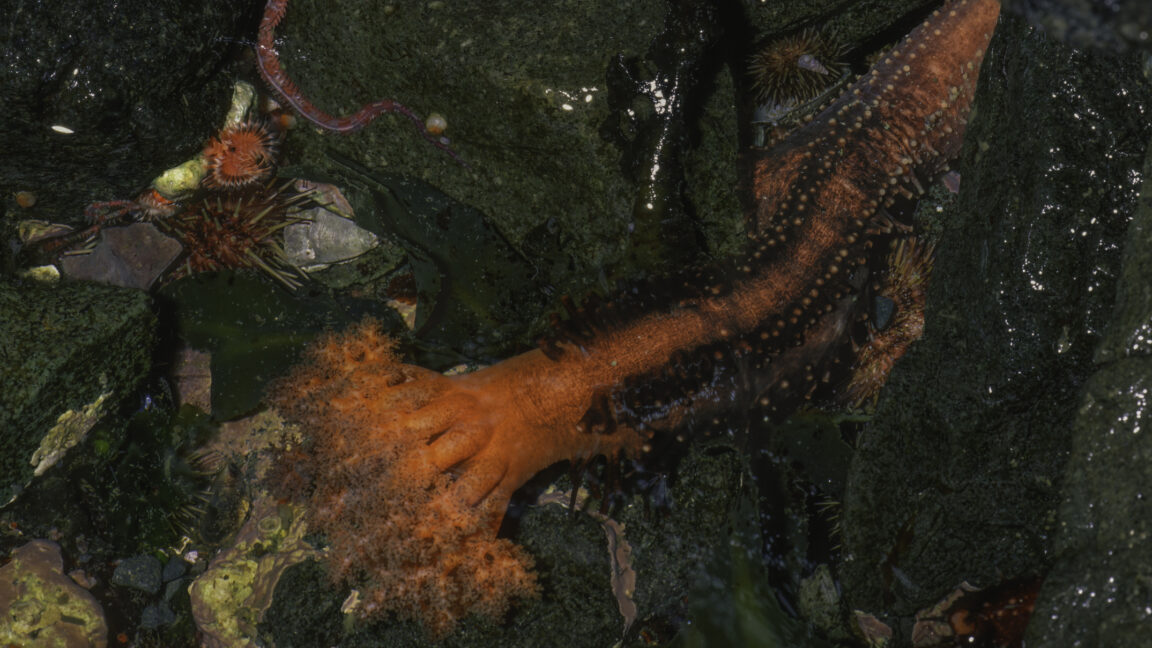
The species Psolus fabricii inhabits the cold waters of the Atlantic and Arctic oceans. Its underside, called a sole, is ringed by a band of tube feet it uses to grip rocks. From there, it extends soft, branching tentacles to feed on suspended particles. Because these sea cucumbers live in harsh environments, their feet and tentacles experience high rates of injury and loss. Evolution has therefore endowed these sites with an incredibly high capacity for regeneration.

What surprises researchers is that the amputated tissues not only survive but do so without any special conditions. “This is naturally occurring tissue immortality,” said Sara Jobson, lead author of the study. “Having tissues that survive that easily is unheard of. We’ve never seen anything like this.” While human organ transplants require sterile environments and nutrient-rich mediums with growth factors, Psolus fabricii fragments thrive in ordinary seawater—an environment that would be lethal to any other tissue.
““This is naturally occurring tissue immortality. We’ve never seen anything like this.””
Key Findings

- Indefinite survival: Separated tissues show no signs of cell death or decay, even after weeks in ordinary seawater. Experiments have maintained viable samples for over 30 days with no apparent changes.
- No special conditions required: Unlike human transplant organs, these fragments need no sterile environments, artificial nutrients, or growth factors. Ordinary seawater, with its salinity and natural microbiota, suffices.
- High regenerative capacity in situ: The feet and tentacles of Psolus fabricii already possess exceptional regenerative ability due to their harsh environment, suggesting a unique evolutionary adaptation. Fragments have been observed to even begin regenerating lost structures.
- Implications for regenerative medicine: This natural mechanism could inspire new approaches to keeping human tissues alive outside the body, improving transplants and injury repair. It could also lead to the development of novel biomaterials.
Context and Analysis
The discovery of tissue immortality in Psolus fabricii does not occur in a vacuum. Other marine organisms, such as starfish and planarian worms, also possess remarkable regenerative abilities. However, what sets this sea cucumber apart is the ease with which its tissues survive outside the body. While a starfish can regenerate a lost arm, the amputated tissue alone does not typically survive independently. In Psolus fabricii, fragments not only survive but maintain structural and functional integrity.
This phenomenon has profound implications for our understanding of programmed cell death (apoptosis) and senescence. Normally, cells that lose contact with their extracellular matrix or survival signals enter a state of cell death called anoikis. Psolus fabricii tissues appear to have evolved mechanisms to evade this process, suggesting alternative signaling pathways that could be exploited therapeutically.
Moreover, the fact that ordinary seawater is sufficient for survival indicates that necessary nutrients and growth factors are provided by the tissue itself or by microorganisms in the water. This could be due to a symbiosis with marine bacteria that supply essential metabolites. Researchers are currently analyzing the microbiome associated with these tissues to determine its role.
Why It Matters

This discovery is not only biologically fascinating but has profound implications for human health. The ability to keep tissues alive outside the body without sophisticated equipment could revolutionize regenerative medicine, organ transplants, and injury treatment. Imagine being able to preserve skin grafts, bone fragments, or even entire organs in simple conditions—like modified seawater—while preparing the recipient. This would drastically reduce costs and logistics of transplants, as well as eliminate the need for complex preservation solutions.
Moreover, understanding the molecular mechanisms that enable this “tissue immortality” could shed light on aging and cellular repair processes. If we can identify the responsible proteins or signaling pathways, we might develop drugs that activate similar responses in human tissues, improving wound healing and slowing age-related deterioration. For biohackers, this represents an entirely new frontier: the possibility of manipulating tissue longevity at a fundamental level.
Your Protocol
Although this finding is in early research stages, we can already extract practical lessons for those seeking to optimize health and longevity:
- 1Prioritize natural regeneration: The sea cucumber's harsh environment boosted its regenerative capacity. In humans, exposing yourself to controlled stressors (like cold or heat) can stimulate similar cellular repair mechanisms, such as autophagy and heat shock protein production. Consider intermittent cold exposure (cold showers, cryotherapy) or heat exposure (sauna).
- 2Support your microbiome: Sea cucumber tissues survive in seawater, which contains microorganisms. In humans, a healthy microbiome is essential for tissue repair. Consume fermented foods (kefir, sauerkraut, kimchi) and prebiotic fiber to maintain diverse gut flora. Also consider probiotics specific for skin and mucosal health.
- 3Manage inflammation: The ability of these tissues to avoid cell death may be linked to a controlled inflammatory response. Reduce chronic inflammation through an anti-inflammatory diet (rich in omega-3s, polyphenols), adequate sleep (7-9 hours), stress management (meditation, yoga), and moderate exercise.
- 4Stimulate autophagy: Intermittent fasting and fasted exercise can activate autophagy, a cellular cleaning process that may mimic some survival mechanisms seen in sea cucumber tissues. Try 16:8 or 5:2 fasting windows.
What To Watch Next
Researchers are already sequencing RNA from Psolus fabricii tissues to identify genes activated during survival outside the body. The first molecular candidates are expected to be published within the next two years. Experiments are also being designed to test whether other tissues from the same or related species show similar properties.
Additionally, synthetic biology teams are exploring the possibility of transferring these genes into human cells via gene therapy, though this remains speculative. If successful, we could see the first animal model trials by 2028, with potential applications in transplants and regenerative medicine. Also, culture media inspired by seawater are being developed to preserve human tissues, with promising preliminary results in cornea and skin preservation.
The Bottom Line
Sea cucumber tissues from Psolus fabricii can survive indefinitely in ordinary seawater—a phenomenon scientists call “naturally occurring tissue immortality.” This discovery offers valuable clues for regenerative medicine and human longevity. While science deciphers the molecular mechanisms, we can apply principles of controlled stress, microbiome care, and inflammation reduction to optimize our own tissue repair. The future of human regeneration may be inspired by a creature living at the bottom of the ocean.
:format(jpg):quality(99):watermark(f.elconfidencial.com/file/a73/f85/d17/a73f85d17f0b2300eddff0d114d4ab10.png,0,275,1)/f.elconfidencial.com/original/19a/0c6/1a1/19a0c61a1a5c1c4850bafab7a82f6748.jpg)
:format(jpg):quality(99):watermark(f.elconfidencial.com/file/a73/f85/d17/a73f85d17f0b2300eddff0d114d4ab10.png,0,275,1)/f.elconfidencial.com/original/8d4/d81/564/8d4d8156462a6c0f027c30699fb3ee3d.jpg)
